Security Cable Solutions: Building Reliable Access Control and Surveillance Systems
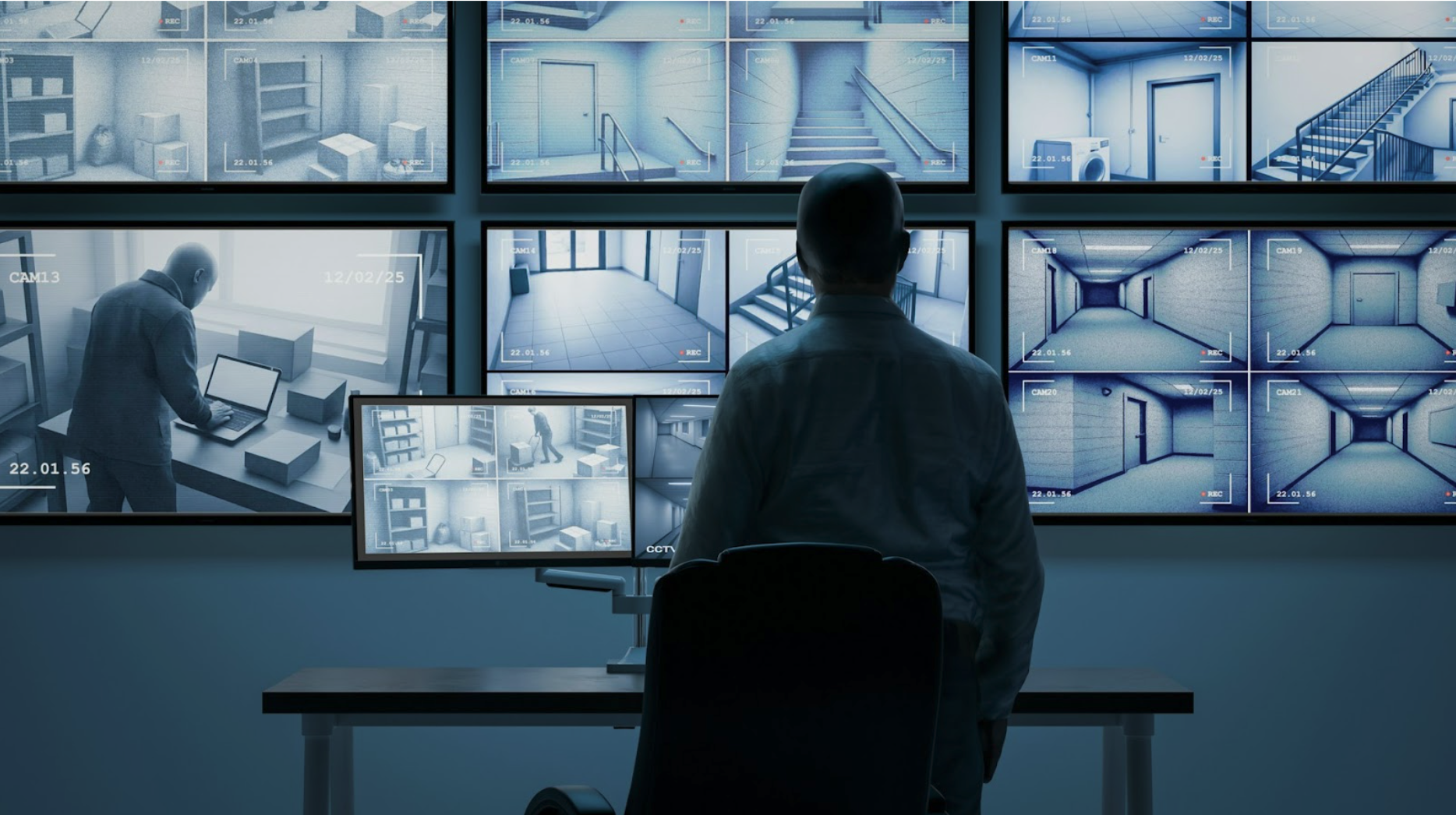
Every reliable access control and surveillance network starts with strong wiring. Hardware, software, and power systems only work together when signals stay stable and interference is controlled. That’s why its important to focus on dependable security cable solutions. This is the foundation of every connected door, camera, and control panel in a commercial environment.
From power delivery to data transmission, cables shape how effectively security systems perform. In this article, we’ll walk through key cabling types, conductor sizing, and shielding strategies that will help to build reliable, code-compliant systems for long-term performance.
Understanding Security Cable Solutions in Access Control and Surveillance
Security cable solutions encompass a wide range of applications, from multi-conductor signal wiring to shielded and composite cables for security and access control systems. These cables carry power, control signals, and data between readers, locks, sensors, and cameras. They also maintain signal integrity across long runs in electrically noisy environments.
For access control wires, consistent signal quality determines the effectiveness of communication between readers and controllers. In wired security camera systems, the construction of the cable affects video clarity, transmission distance, and network performance. Selecting properly rated conductors and shielding enables these systems to deliver reliable data and power in complex commercial installations.
The Role of Access Control Cable in Reliable Building Security
Access control cable connects every device, helping to regulate entry and exit. These include card readers, request-to-exit sensors, locking mechanisms, and door position switches. Each device requires reliable power and communication pathways to function correctly.
It’s common to select shielded security access control cables when routes run near lighting circuits, elevators, or HVAC systems. Shielding blocks electromagnetic interference that can disrupt signal timing or cause data errors. Cables may feature foil shields for rejecting high-frequency noise or braided shields for enhanced mechanical strength. Multi-conductor designs also simplify cabling by combining power and data under a single jacket, reducing clutter in control panels and conduits.
Selecting the right insulation and conductor count helps maintain stable voltage at each door. When circuits are clearly organized, service and testing become faster, and systems operate without interruption.
Camera Wiring and Data Transmission: Clarity Through Connection
Video clarity depends on cable quality. In wired security camera systems, the type of wire directly impacts image consistency, latency, and data throughput. For analog cameras, coaxial cable remains standard because it transmits baseband video with predictable performance. For digital and IP cameras, twisted-pair Ethernet-style cabling is dominant due to its higher data capacity and compatibility with Power over Ethernet (PoE) technology.
Reliable camera wire balances data rate, shielding, and flexibility. Shielded designs minimize interference, especially when long runs pass near power cables or heavy machinery. Consistent impedance and quality terminations maintain crisp images and clear feeds. Whether in a single building or across a networked facility, using high-grade cabling keeps streams stable and reduces troubleshooting later.
RS-485: Communication Backbone for Security Devices
Many systems communicate using RS-485. It's a widely adopted standard for serial data transmission. RS485 supports multiple devices on the same network using differential signaling, which helps reject electrical noise and extend range. A twisted pair with proper impedance keeps data consistent, even over hundreds of feet.
Door controllers, access panels, and PTZ cameras often rely on RS-485 communication for synchronized control and operation. Proper shielding helps maintain accuracy in environments where motors or power circuits generate interference. By specifying the right twisted pair geometry and capacitance, it’s easy to achieve predictable results that help systems operate as intended.
Composite Cable Solutions: Simplifying Complex Security Systems
Managing power, data, and control lines separately can result in bulky conduit runs and complex panels. A composite cable for security and access control systems combines multiple conductors under one jacket, which typically include twisted pairs for data, power wires, and control lines.
This type of cable offers several advantages:
- Fewer individual runs, simplifying installation and documentation
- Reduced clutter in control cabinets and raceways
- Built-in separation that minimizes crosstalk and interference
For surveillance, composites might combine power and control conductors for cameras. In access control, they can combine power, reader data, and door contacts. These integrated designs make maintenance easier and reduce confusion during system expansions.
Choosing the Right Wire Gauge: 16 AWG vs. 18 AWG
Wire size directly affects power delivery and voltage stability. The American Wire Gauge (AWG) system defines conductor thickness. Larger wires have smaller gauge numbers. In most access control and surveillance setups, use 16 AWG wire or 18 AWG conductors, depending on distance and current requirements.
Larger 16 AWG conductors reduce voltage drop and are ideal for devices like magnetic locks or strikes that require higher current. Smaller 18 AWG conductors are efficient for shorter runs or low-power devices such as readers and sensors. Choosing the right gauge helps maintain system power balance and prevents performance issues caused by underpowered components. Matching wire size to load also minimizes heat buildup and supports consistent device response across long cable runs.
Shielding: Quieting the Signal Path
Electromagnetic interference (EMI) is one of the most common challenges in integrated security systems. When access control and video signals share space with building power circuits, unshielded cabling can pick up noise. That’s where shielded security access control cables come in.
A foil or braid shield prevents unwanted coupling between circuits, keeping data signals clean and accurate. For access control loops, shielding protects data integrity between readers and panels. For video, it helps maintain sharpness by blocking outside frequencies that can degrade picture quality. These small details translate into long-term reliability and fewer intermittent system errors.
Composite and Shielded Options Working Together
In many projects, composite and shielded designs overlap to provide both organization and performance. A single composite cable might include individually shielded pairs for data, along with unshielded power conductors, all optimized for signal isolation. This hybrid approach offers the efficiency of integrated wiring with the noise control needed for advanced systems. It’s a practical choice for large buildings, where dense wiring environments make electromagnetic compatibility a high priority.
Building Confidence Through Reliable Cable Infrastructure
Every system depends on its physical layer. When cabling supports power, signal, and control consistently, the technology above it works smoothly. Reliable security cable solutions minimize service calls, reduce downtime, and create a stable foundation for scalable access control and video systems.
The best security systems are the ones people never notice. That's because they work without interruption. Using proper conductor sizes, quality shielding, and organized composites creates that kind of reliability. The return is peace of mind for operators, integrators, and building managers alike.
Connecting Reliability and Performance
Security starts at the wire level. The right mix of access control cable, camera wire, and shielded or composite constructions ensure that every door, camera, and controller communicates consistently. Small decisions, such as specifying 16 AWG wire for long lock runs or using RS485 cabling for reliable device communication, add up to long-term stability and dependable operation.
For more information on technical specifications and selection guidance, visit our Security & Access Control Resource Center. To discuss your project needs, contact our team.
Reliable connectivity is the backbone of modern security systems. When cabling is chosen thoughtfully, access control and surveillance networks stay strong, responsive, and ready when needed most.

Windy City Wire
Windy City Wire
Windy City Wire