DAS Cable Ensuring Public Safety and ERCES Compliance
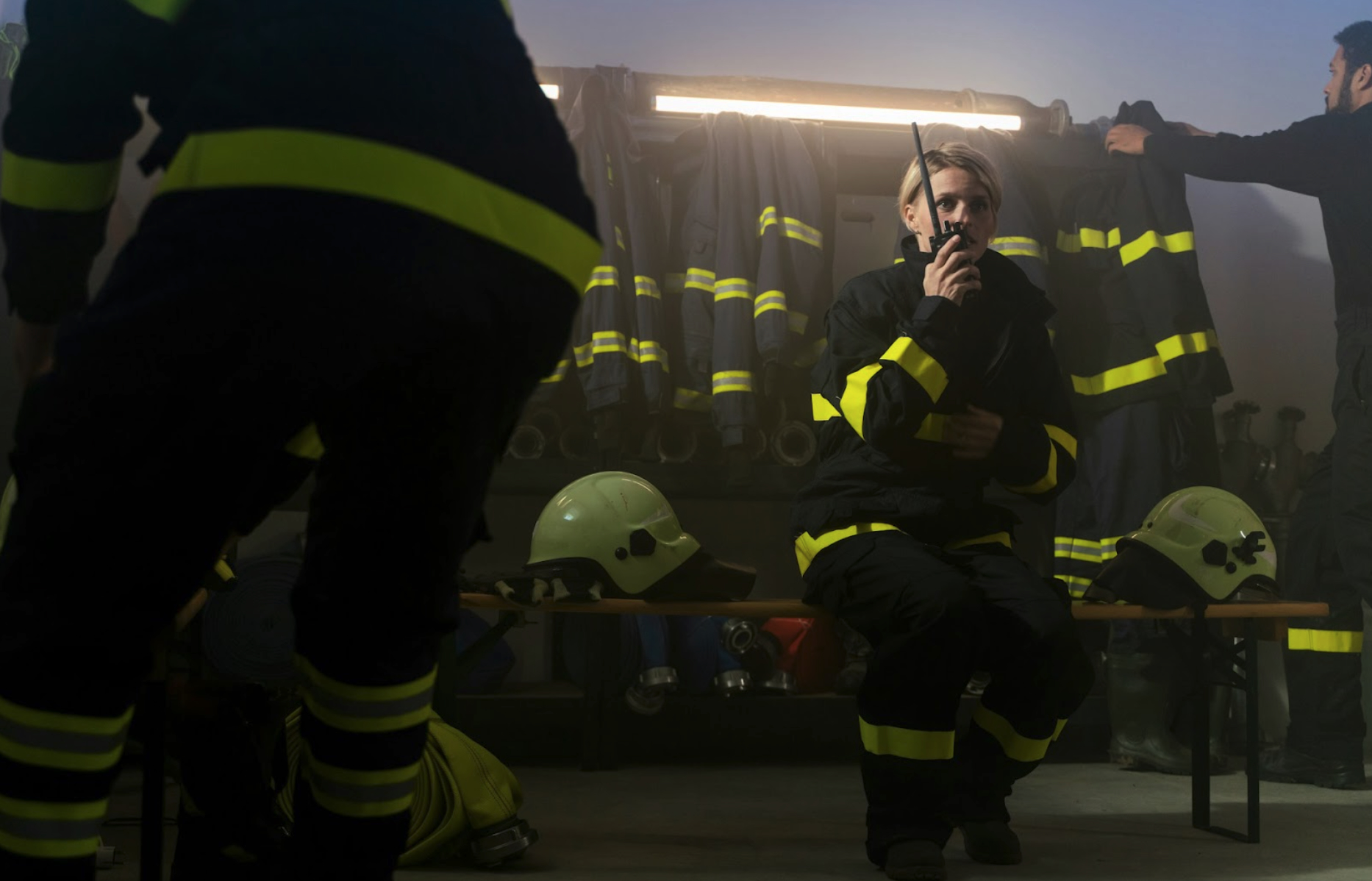
Reliable communication stands at the heart of modern public safety. When first responders enter a building, they rely on clear radio coverage to coordinate with one another and with command staff. Distributed Antenna Systems, or DAS, provide a stable backbone for coverage inside commercial and industrial facilities. At the center of every public safety DAS lies a simple yet critical component: high-quality DAS cable that carries radio signals with low loss and strong shielding performance.
This is a look at how DAS cable supports emergency responder radio coverage and how it connects to Emergency Responder Communication Enhancement Systems, often abbreviated as ERCES. These systems work in conjunction with building codes and fire protection strategies to maintain radio signal availability in stairwells, basements, and other challenging spaces. When understanding the expectations for public safety DAS, it becomes easier to see why cabling decisions matter so much for compliance and performance.
The Critical Role of DAS in Public Safety Infrastructure
A Distributed Antenna System functions as an in-building network for radio signals. Instead of relying only on exterior antennas and outdoor coverage, a public safety DAS system brings the signal indoors through dedicated infrastructure. Head-end equipment receives donor signals, conditions them, and redistributes them through a network of antennas and RF cable segments placed throughout the structure.
Public safety DAS installations often form part of a broader Emergency Responder Radio Coverage strategy. Local codes and fire marshals look for systems that support reliable voice communication on the frequencies used by police, fire, and emergency medical services. When that coverage reaches into critical spaces, responders can coordinate evacuations, locate hazards, and communicate changing conditions more effectively.
Within that framework, the DAS cable carries the RF energy between components, including bidirectional amplifier units, splitters, and remote antennas. Losses in the cable translate directly into weaker signal levels at the antenna. Good design, combined with the appropriate cable selection, helps maintain the link budget required by public safety systems.
Understanding ERCES and ERRCS Requirements
Emergency Responder Communication Enhancement Systems describe the overall combination of equipment, antennas, and cabling that supports building radio coverage. Many jurisdictions reference this concept through model fire codes that spell out performance criteria, testing procedures, and acceptance requirements. ERRCS meaning often comes down to the idea that the building must support usable radio communication for emergency responders wherever they operate.
These requirements touch on signal strength, intelligibility, reliability, and survivability. Codes may reference minimum signal levels in specific areas, coverage percentages by floor, and expectations for battery or generator backup. They may also require survivability ratings for critical pathways to ensure that communications remain available during fires or other disruptive events.
ERCES discussions give context to every hardware choice in a system. Antennas, amplifiers, and DAS cable all contribute to whether the finished installation meets those coverage and survivability targets. A slight change in cable type can result in a noticeable difference in signal margins at the far end of a long cable run.
How DAS Cable Supports First Responder Communication
Public safety radio systems place demanding requirements on the cabling that carries RF energy. The cable must support specific frequency bands, handle power levels safely, and exhibit predictable attenuation across its entire length. It also requires strong shielding to ensure that signals remain clean and free from interference in electrically noisy environments.
Specialized coaxial constructions serve this role. Low-loss RF cable with a consistent dielectric, proper braiding, and often a foil layer helps preserve signal strength between the head-end and remote antennas. In many public safety designs, first responder DAS wire and cable runs from the base station or bi-directional amplifier to passive or active components throughout the building.
Part numbers such as ICA12-50JPL, LCF12-50J often appear in public safety DAS specifications. These types of cables focus on low attenuation over long runs, stable performance across the required frequency bands, and mechanical durability in commercial settings. When reading a specification, look closely at the attenuation charts, shield construction, and jacket ratings to understand how each product supports the system goals.
The Importance of UL 2524 in Public Safety DAS Design
In addition to performance requirements, public safety systems must align with product standards that address survivability and reliability. UL 2524 covers two-way emergency radio communication enhancement systems in buildings, including many of the active components that make up a public safety DAS. The standard looks at how systems behave during fire events, power disruptions, and other stressful conditions.
The DAS cable supports these goals by providing a robust signal path between certified devices. While cable alone does not grant certification, its physical and electrical characteristics influence how the overall system performs during testing. Flame spread properties, smoke generation, and temperature ratings all play roles in survivability evaluations.
When considering UL 2524, view it as a framework that ties together components such as amplifiers, batteries, enclosures, antennas, and cabling. Each piece must do its part so that the assembled system can meet the requirements for emergency operation. That perspective highlights why cabling decisions deserve attention early in the design process.
Key Considerations for DAS Cable in Compliance-Driven Projects
Projects driven by ERCES requirements often take place in complex commercial or industrial facilities. These sites may include dense mechanical spaces, long vertical and horizontal pathways, and a mix of construction materials that affect radio propagation. In that environment, DAS cable selection must balance electrical performance, code requirements, and long-term durability.
Many designs require jackets that exhibit low smoke and controlled flame spread characteristics. Shielding quality also matters. Strong shielding helps maintain signal quality even when RF cable shares space with power conductors, variable frequency drives, or other noise sources. Mechanical robustness reduces the risk of damage during construction and later maintenance activities.
Cables used in BDA systems must also align with BDA system requirements. The bi-directional amplifier depends on predictable input and output levels, so attenuation values at the operating frequencies need to stay within tight ranges. BDA DAS wire and cable products that meet these expectations help maintain stable gain settings and reduce the likelihood of oscillation or desense problems.
Choosing Cable That Aligns With ERCES Goals
When evaluating options for DAS cable, begin by considering the performance goals of the public safety system. Coverage requirements, building geometry, and expected RF conditions all influence the needed margins in the design. From there, look at attenuation per unit length, shield construction, and jacket ratings to identify products that support those goals.
Bulk availability matters in large buildings, campuses, and multi-structure facilities. Designers and contractors prefer consistent cable types across risers and distribution paths to ensure that calculations remain straightforward and spare material remains usable in future changes. A coherent cable strategy also makes it easier for maintenance teams to interpret as-built drawings and labeling years after the initial project closes.
Because public safety DAS projects serve critical life safety functions, many stakeholders participate in cable discussions. Authorities having jurisdiction, safety engineers, system designers, electrical contractors, and building owners all bring their priorities to the table. They want reliable communication, clear documentation, and predictable performance over the long term. Thoughtful cable selection plays a direct role in meeting those expectations.
Supporting Safer Buildings With Reliable DAS Cable
Public safety radio coverage plays a crucial role in building infrastructure in many jurisdictions. A well-designed public safety DAS system helps maintain communication where it matters most, from stairwells to equipment rooms to large assembly spaces. Behind every antenna and amplifier, DAS cable ties the system together by carrying RF signals with predictable loss, strong shielding, and appropriate safety ratings.
Understanding ERCES and ERRCS requirements gives structure to these decisions. When connecting cable choices to code language, UL 2524 expectations, and local acceptance criteria, the reasons for specific products become clear. First responder DAS wire and cable does more than move signals from point A to point B. It supports the communication link that building occupants and responders depend on during emergencies.
For teams who want to explore options, technical information, and products, we offer a DAS Resource Center to answer many questions.
For project-based sourcing questions, specifications, and availability details, connect with us and see what’s possible.
