DAS Cable and Public Safety: Meeting ERCES and UL2524 Compliance
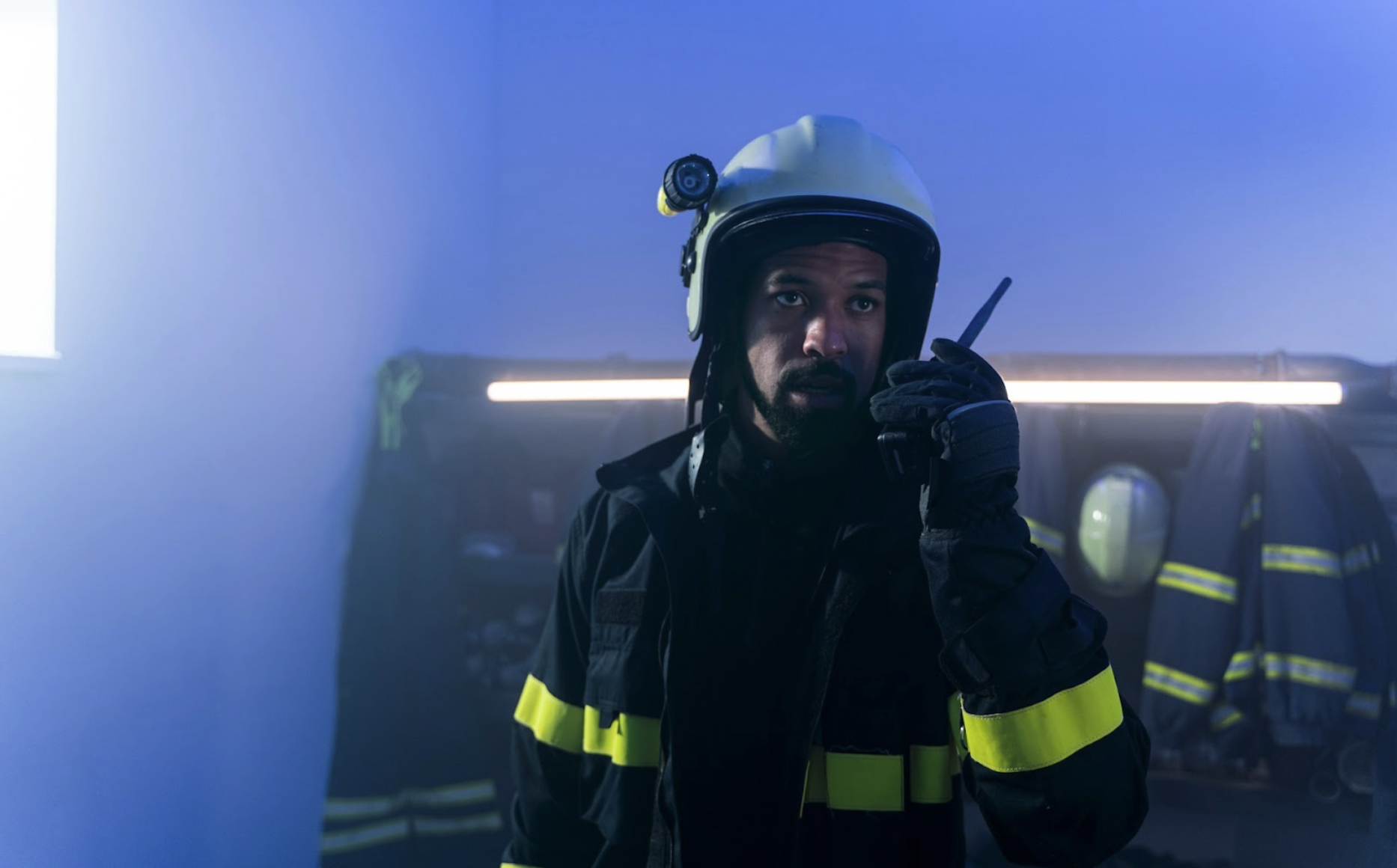
When discussing public safety communications, it's ultimately about life safety. Distributed Antenna Systems, or DAS, must be treated as a core part of that mission because these systems carry the radio traffic that first responders rely on when they enter a building. Those radios need reliable coverage in stairwells, elevator lobbies, equipment rooms, basements, and large interior spaces. In practice, the coverage picture fluctuates with the quality of the physical layer. That’s the reason DAS cable is essential to system performance.
The right cable choice supports consistent RF performance, system survivability, and code compliance. This is an examination of ERCES compliance, the role of UL2524, and the cable attributes that enable a public safety data system to pass planning, testing, and inspection with confidence.
Understanding DAS, ERCES, and What ERRCS Means
A Distributed Antenna System extends radio coverage by carrying signals from a donor source to a network of antennas that are rebroadcast inside the structure. Public safety versions of DAS are often grouped under ERCES, short for Emergency Responder Communication Enhancement Systems. If you have seen the acronym and wondered about errcs meaning, it refers to in-building two-way radio systems that meet fire code, usually under the International Fire Code and NFPA 72. The concept is simple. When the building itself blocks or attenuates radio signals, ERCES fills the gaps, allowing firefighters, police, and EMS to communicate with each other and with command.
Inside that framework, cable selection is not a cosmetic detail. Every decibel of loss on a feeder or jumper adds up across the run. The goal is to achieve stable impedance, low attenuation, strong shielding, and materials that perform well in the presence of heat and smoke. Specifications with those fundamentals are important to keep in mind because they directly influence testing results and operational reliability.
Why Cable is the Backbone of Public Safety Performance
A public safety DAS typically includes a donor antenna, a head-end with a bi-directional amplifier or signal booster, a public safety repeater or equivalent network interface, and a distribution layer that feeds antennas across the building. The network operates across licensed public safety bands and often coexists with commercial cellular systems that may use separate gear. In every case, first responder DAS wire and cable connects the critical points in the chain. Quality cable protects link budgets. It limits ingress and egress. It stabilizes VSWR and helps maintain amplifier health by keeping reflected power within spec.
When choosing cable for these systems, look for predictable attenuation across the frequency range, uniform shielding coverage, a reliable dielectric, and a jacket that meets the required flame and smoke ratings. These choices are not about style. They are primarily concerned with uptime and repeatable performance, especially when the AHJ tests the system under load.
Meeting UL2524 and Why it Matters to ERCES
UL2524 is the standard for in-building two-way emergency radio communication enhancement systems. It covers system-level performance, but it also sets expectations for the survivability and reliability of the parts that make up the system. In our experience, designing to UL2524 provides the project with an operational safety margin. The standard assesses electrical performance, environmental resilience, and the ability to operate during a fire event. It connects directly to ERCES acceptance because many jurisdictions now require UL2524 listed solutions or an equivalent path to compliance.
Cables that serve life safety radio paths must meet flame spread and smoke development limits. They must also maintain electrical characteristics under elevated temperatures. If the system depends on a long feeder to an antenna grid, the feeder’s attenuation cannot spike when the jacket and dielectric heat up. This is where construction quality makes a measurable difference. Using a UL recognized cable that aligns with the system’s listing helps close that loop and supports the submittal package that goes to the AHJ.
Components and Part Families Seen on Public Safety Projects
Projects often combine multiple cable families, each serving a specific role. Feeder runs from the head-end to splitters and from splitters to remote zones use low loss coax. Interconnects at the bi directional amplifier and at active components need flexible jumpers with tight return loss.
It is common to see references to families such as 2HB-DS-CAB for general DAS infrastructure, along with specific product codes like Ica12-50jpl and Lcf12-50j for low attenuation, stable performance coax used in public safety applications. Many engineers and contractors will encounter those designations in bills of materials and as-built drawings. The point is not to endorse a single part. It is to show that part selection is deliberate. Attenuation per 100 feet, shielding type, bend radius, and jacket rating each have a specific purpose, and the part number reflects that purpose.
This level of specificity helps everyone on the project team. Estimators can model loss and cost. Installers can route cable within bend and pull limits. Commissioning teams can compare measured loss to the design target and close out faster.
How Building Conditions Challenge Public Safety Coverage
Modern structures present difficult RF paths. Reinforced concrete, coated glass, deep cores, and equipment rooms all reduce signal levels. Below-grade areas can be particularly challenging. These conditions heighten the importance of selecting cables carefully. Poorly shielded or inconsistent cables raise the noise floor and reduce the usable link margin. Once you factor in splitters, tappers, connectors, and jumpers, every unnecessary dB of loss or reflection becomes hard to recover without oversizing active equipment.
Consider thermal and mechanical stress over time as well. Cable trays that carry power and HVAC controls can radiate interference if bonding is not tight. Roof penetrations and riser shafts subject the building to temperature fluctuations. The right cable construction keeps the system stable across these variables. That stability helps with initial acceptance and with the periodic recertification tests that many jurisdictions require.
What to Look for in DAS Cable for Compliance and Reliability
Specifications should focus on a small set of measurable attributes. First, match the nominal impedance and keep return loss within the recommended window at the frequencies in use. Second, choose shielding that delivers high coverage and low transfer impedance. Third, look at attenuation tables across the length of the runs and account for connectors. Fourth, pick a dielectric that maintains its properties at elevated temperatures. Jacket ratings must align with the pathway. Where the design calls for a fire-rated survivability cable, that rating must be supported by documentation.
These are straightforward checks, but they pay off. A public safety DAS system that uses consistent, high-quality cable is easier to balance, easier to test, and easier to maintain. It also reduces the number of field variables during commissioning, saving time for both the integrator and the building team.
Where BDAs, Repeaters, and Cabling Intersect
A DAS does not function properly without reliable signal sources and amplification stages. The BDA DAS wire and cable connections that tie donor signals to the head-end and distribute amplified signals to the antenna network are the arteries of the system. In many projects, a public safety repeater pulls the donor signal from the external network and feeds the BDA. If the cabling between these devices introduces excessive loss, the BDA must work harder to meet coverage targets, which can reduce headroom and lead to heat and reliability issues.
On the other hand, well-chosen feeders and jumpers keep the system within the amplifier’s comfort zone. That helps extend equipment life and protects against overload in emergency traffic. It also supports cleaner trace results during sweep testing and smoother closeout when the AHJ verifies coverage.
Practical Documentation and Acceptance
Compliance is as much about paperwork as it is about performance. Documenting cable types, attenuation budgets, connector counts, and routing assumptions to enable inspectors to trace design intent to field conditions are all important. When submitting UL2524-aligned solutions, include listings and data sheets so that the AHJ can confirm the cable matches the required ratings. This habit reduces back and forth during review and helps commissioning teams focus on field measurements rather than product questions.
It is worth noting that cable quality also supports maintenance. After year one, the team performing recertification testing will appreciate a system that reads cleanly on a spectrum analyzer and maintains its measured losses within expected tolerances. Good cable makes that possible.
Security, Reliability, and the Bigger Picture
Public safety radio does not have the luxury of downtime. During a fire or other emergency, occupants and responders depend on clear speech paths. A thoughtful cable specification supports that outcome. Stable impedance protects amplifier stages. Low-loss feeders preserve link budgets. Quality shielding limits interference. Fire and smoke ratings support life safety goals. Together, those elements keep the system performing across its service life with fewer surprises and fewer callbacks.
Build the RF path with the same rigor you apply to power and life safety signaling. Use first responder DAS wire and cable that aligns with UL2524 system expectations and local code. Treat the cable schedule as a design tool, not an afterthought. This approach helps the entire team, from the engineer who stamps the drawings to the AHJ who signs the acceptance.
Next Steps
Das cable is a foundational choice in any public safety DAS system. It touches ERCES design, UL2524 alignment, amplifier health, and day-to-day reliability. If you are evaluating materials for a current project, verify listings, check attenuation against your link budget, and match jacket ratings to the pathway. When you must reference specific families, you may encounter labels like 2HB-DS-CAB, Ica12-50jpl, and Lcf12-50j, each suited to different roles in the RF chain. What matters most isn’t the name, but the performance it delivers.
If you would like to dive deeper into DAS fundamentals and compliance topics, visit our Resource Center. For project questions or specification support, contact our team.
By focusing on proven materials, clear documentation, and UL2524 aligned choices, we help build systems that support first responder communication when it matters most.

Windy City Wire
Windy City Wire
Windy City Wire