How Windy City Wire Tests, Inspects, and Documents SmartWire Cable
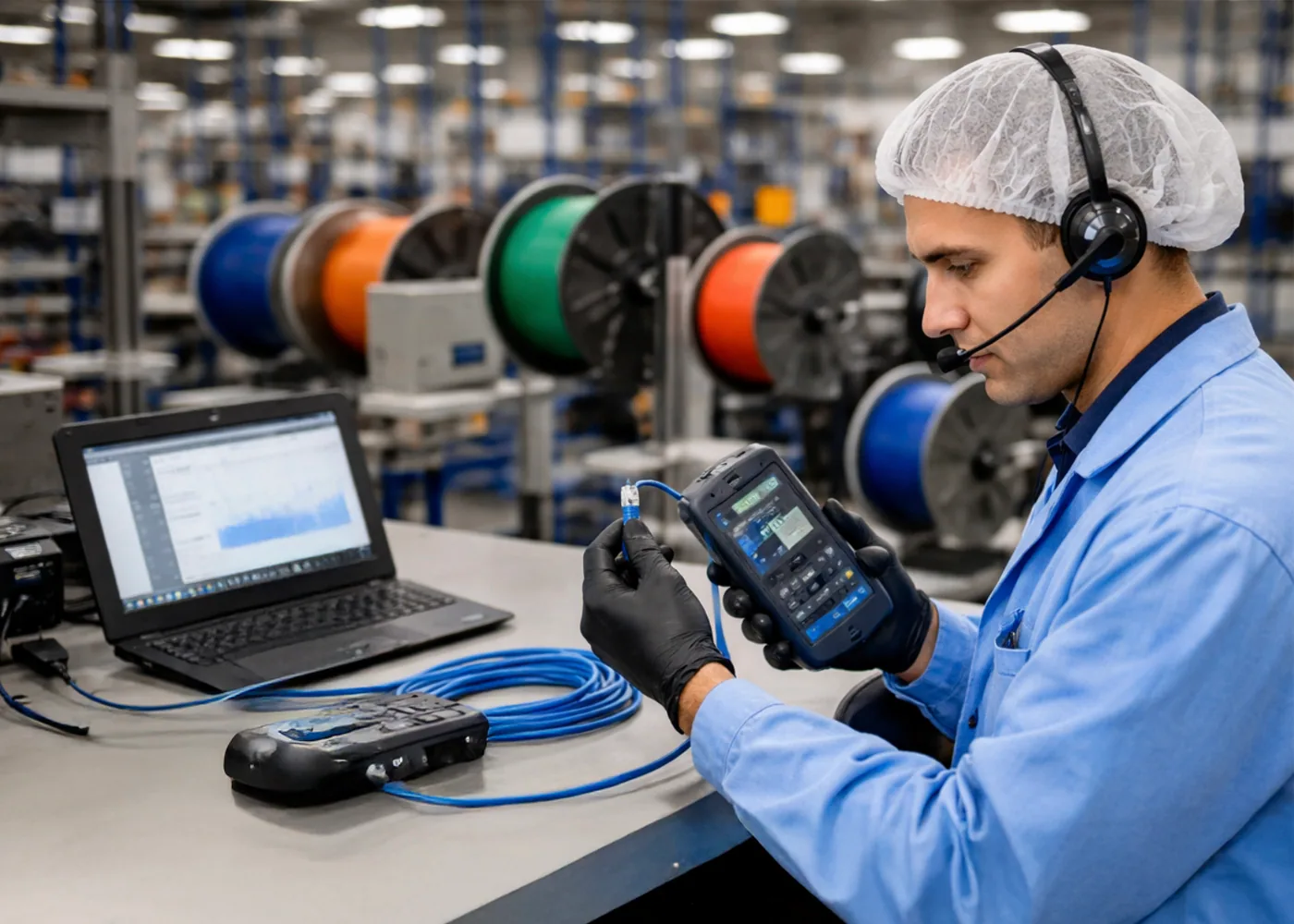

SmartWire is engineered for the realities of the low-voltage jobsite, and that starts long before a box or reel arrives at the warehouse. Testing, inspection, and documentation are built into every production run to confirm that cable construction, electrical performance, and printed identification live up to the specification and the listing on the jacket. The approach spans in-line quality assurance during manufacturing, formal batch testing by lot, compliance verification, and end-to-end traceability. The goal is consistent, code-aligned product that installs predictably and documents cleanly on submittals and as-builts.
What follows is a practical look at how SmartWire quality is managed from extrusion to final labeling, with emphasis on in-line QA, batch testing, compliance, and lot tracking.
Why Manufacturing Discipline Matters for SmartWire
SmartWire is produced in the United States with a manufacturing model designed for repeatable results. Process control, skilled operators, and automation work together to keep dimensions inside tolerance, print crisp and accurate, and footage counts true. The same attention extends to value-added features—SmartWire Glide Lubrication and FastFIND Footage Markers—which are applied and verified in process so they function as intended in the field. This integrated approach means the features professionals rely on are confirmed during production, not left to chance.
In-line QA: Verifying Cable as it’s Made
In-line quality assurance is the first and most continuous layer of SmartWire verification. It targets the characteristics that are best controlled right on the manufacturing line:
Extrusion and dimensions: Laser and contact gauges monitor outer diameter, insulation thickness, jacket thickness, and concentricity. When measurement trends begin to drift, alarms trigger adjustments before product moves out of tolerance. For twisted-pair and multi-conductor constructions, lay length and pairing uniformity are also checked to maintain electrical balance and consistent handling.
Insulation integrity: High-voltage spark testing screens for pinholes or flaws in primary insulation. This non-destructive, continuous test flags defects immediately, keeping substandard footage from advancing downstream.
Conductor and shield formation: For shielded cables, tape wrap overlap and drain wire contact are verified at intervals. For braided or served shields, coverage percentage is spot-checked to match the design target.
Jacket print and legend accuracy: Print wheels and ink systems are verified for clarity and contrast at startup and at routine checkpoints. The legend carries the essential information—brand and model family, UL or NEC type, voltage and temperature ratings, and environmental suitability where applicable, along with “Made in the USA.” Consistent print ensures that submittal data and jacket markings tell the same story.
FastFIND Footage Markers: Sequential footage printing and counter systems are calibrated at changeover and checked through the run. Markers are aligned and repeat at the required interval so footage verification remains reliable from the first foot to the last.
SmartWire Glide: Glide application is metered and monitored to maintain a uniform coating. This factory-applied technology is engineered to reduce pulling friction, supporting smoother pulls through conduit and pathways. In-line checks confirm the coating is present and consistent across the lot.
Color and identification: Jacket and conductor colors are confirmed against master standards under controlled lighting. For striped or tracer conductors, stripe width and positioning are spot-checked so identification stays unmistakable in the field.
Put-up and packaging: Length verification, reel or box integrity, and labeling are confirmed at pack-out. Standard 1,000-foot put-ups are audited for count and secure wind, with labels tied to the lot record for traceability.
These in-line controls act as the first filter for product consistency. If a measurement or visual check falls outside tolerance, the process pauses for correction, and affected footage is quarantined and investigated.
Batch Testing: Deeper Verification by Lot
While in-line QA protects against drift and obvious defects, formal batch testing verifies construction and performance in more depth. Each production lot follows a documented sampling plan and is qualified against the published specification and applicable standards. Typical batch testing includes:
Electrical performance: DC resistance per conductor, insulation resistance, dielectric withstand (hi-pot), and capacitance measurements confirm that electrical behavior aligns with the design. For category cable and data-centric control cables, impedance, return loss, and crosstalk are measured across the specified frequency range using calibrated analyzers.
Construction and dimensions: Cross-sections are taken and measured to confirm conductor size and stranding, insulation and jacket wall thickness, and concentricity. Adhesion and strip characteristics are evaluated to ensure clean termination behavior.
Mechanical and material properties: Tensile strength and elongation of insulation and jacket compounds are tested before and after heat aging. Cold bend and heat shock tests evaluate flexibility and stability across temperature extremes. Abrasion and tear tests check jacket durability relative to the product’s intended application.
Environmental and exposure checks: Where applicable to the listing and jacket legend, verification for wet-location suitability, sunlight resistance, or direct burial is performed on representative constructions. Shield corrosion and compound compatibility checks help confirm long-term stability.
Print durability and colorfastness: Solvent rubs, abrasion passes, and visual inspection confirm that print remains legible. Color accuracy is re-verified against standards to support reliable identification on multi-conductor and multi-pair cables.
Flame performance checks (as required by type): Representative constructions are verified against flame requirements corresponding to listings such as CM/CMR, PLTC/ITC, TC-ER, or plenum-rated category cable, using standard test methods and acceptance criteria.
Results from batch testing are tied directly to the lot number and retained with the manufacturing record. The lot is released to inventory only after passing all required checks.
Compliance and Markings: What Appears On the Jacket
Compliance is communicated through clear, accurate markings. SmartWire jacket print is designed to present the identifiers professionals expect to see:
Manufacturer and brand identification, including SmartWire and “Made in the USA”
Product family or type designation aligned with the construction
UL and NEC type markings as applicable to the product (examples include TC-ER for tray, PLTC for power-limited control, FPL and NPLF for fire alarm, CMR for riser communications, CMP for plenum communications, and TFFN for certain building-wire conductors)
Voltage and temperature ratings that align with the listing and tested performance
Environmental suitability when applicable to the construction, such as wet location, sunlight resistance, or direct burial
Sequential FastFIND footage markers
These markings map directly to the product spec sheets and A&E documentation. The same information appears on packaging labels so cartons and reels can be identified at a glance in staging areas, trucks, and storerooms. Where appropriate, material declarations—such as RoHS compliance—are available to support project documentation requirements.
Lot Tracking and Documentation: Tying Product to Data
Traceability is foundational to SmartWire quality. Every box or reel links back to a unique production lot, and that lot ties to a complete digital record that includes:
Raw materials and component batches used in the run, including conductor copper, insulation, jacket compounds, shield tapes, and inks
Line settings, operator checkpoints, and any mid-run adjustments or tool changes
In-line QA results, including gauges, alarms, and corrective actions when triggered
Batch test results, with pass/fail status against specification criteria
Print samples, color verifications, and packaging audits
Any deviations, nonconformance reports, and corrective actions, along with final disposition
Lot identifiers appear on labels and, where applicable, in printed date codes on the jacket. With these identifiers, a carton or reel can be traced back to its exact manufacturing conditions and test results. When projects require documentation packages, certificates of conformance and test summaries can be prepared to accompany submittals and as-built records.
Change control is handled through a formal process. If a material, supplier, or process requires modification, the change is documented, risk-assessed, tested, and approved prior to release. This keeps the printed specification aligned with delivered performance and ensures that compliance markings remain accurate over time.
How SmartWire Features Support Verification in the Field
SmartWire integrates features that make jobsite verification straightforward and help crews maintain tight control of materials and documentation:
FastFIND Footage Markers: Sequential footage printed at defined intervals supports precise point-to-point measurements, confirms shipped lengths, and makes it simple to record remaining footage after a pull. By taking guesswork out of measurement, these markers help reduce waste and streamline project tracking.
SmartWire Glide Lubrication: A factory-applied low-friction coating engineered to reduce pulling resistance. By lowering friction, Glide supports cleaner pulls through crowded conduits and long horizontal runs, which in turn supports predictable installation timelines and clearer documentation of pulls.
Standardized color options: Consistent jacket and conductor colors—along with stripe and tracer offerings—help maintain system identification standards from drawing to as-built. When colors are stable and consistent lot to lot, labeling and test documentation remain aligned.
These features are verified during production and designed to integrate with the overall QA and documentation process, not sit apart from it.
From the Line to Submittals: A Single Flow of Quality
SmartWire quality is a coordinated sequence rather than isolated checks. It starts with controlled, American manufacturing that uses automation and skilled oversight to keep line-to-line variation low. It continues with in-line QA that keeps critical dimensions, print, and footage on target. It deepens with batch testing that verifies electrical, mechanical, and environmental performance at the lot level. It is made visible through accurate compliance markings and supported by downloadable specifications and A&E documents. Finally, it is stitched together by lot tracking that ties each reel and box to its production data.
The outcome is cable that arrives with the right markings, pulls the way it was designed to pull, and brings documentation that matches what’s printed on the jacket. For installers and technicians building out access control, fire alarm, audio, building automation, and network systems, predictability is the practical value of a disciplined quality program. It shortens troubleshooting, simplifies inspections, and helps keep material usage and documentation aligned throughout a project.
Compliance Snapshots Across SmartWire Families
SmartWire spans multiple application families, and compliance markings reflect those use cases:
Control and instrumentation: Power-limited control cables commonly carry PLTC or ITC-type markings and display temperature and voltage ratings consistent with the NEC articles that govern their use. Shielding options are validated for continuity and coverage to support noise-sensitive circuits.
Fire alarm and life safety: Constructions in this family are listed under fire alarm types such as FPL, with riser and plenum variants where required by code pathways. Flame performance is verified, and jacket legends clarify the use environment permitted by the listing.
Tray cable: TC-ER-rated constructions are tested and marked to indicate suitability for exposed runs in industrial and commercial settings when installed per code. Mechanical robustness and flame performance are verified as part of type qualification.
Communications: Riser- and plenum-rated data and communications cables carry CMR or CMP markings. For category cable (SmartCAT), electrical performance is measured against the category standard, with headroom verified to the published frequency.
Building wire: Single-conductor offerings such as TFFN identify UL type, voltage, and temperature ratings directly on the conductor jacket, aligning with common in-conduit applications.
Across these families, material declarations (such as RoHS) and spec sheets are maintained to support project submittals, closeout packages, and long-term facility documentation.
Sustaining Quality at Scale
Scaling production without sacrificing consistency depends on standardization and feedback. Work instructions, calibration schedules, and preventive maintenance keep equipment and methods aligned. Statistical process control highlights trends before they become issues. Nonconformance reports and corrective actions close the loop when a deviation occurs. Supplier quality programs maintain incoming material stability, and periodic re-qualification confirms that listings and performance remain aligned with evolving standards and application demands. These practices sustain day-in, day-out uniformity across diverse product families and high volumes.
For more information on SmartWire testing, inspection, compliance, and documentation—or to request specifications and QA details for an upcoming project—reach out to our team.
