Control Cable, Coax, and Fiber in AV Systems
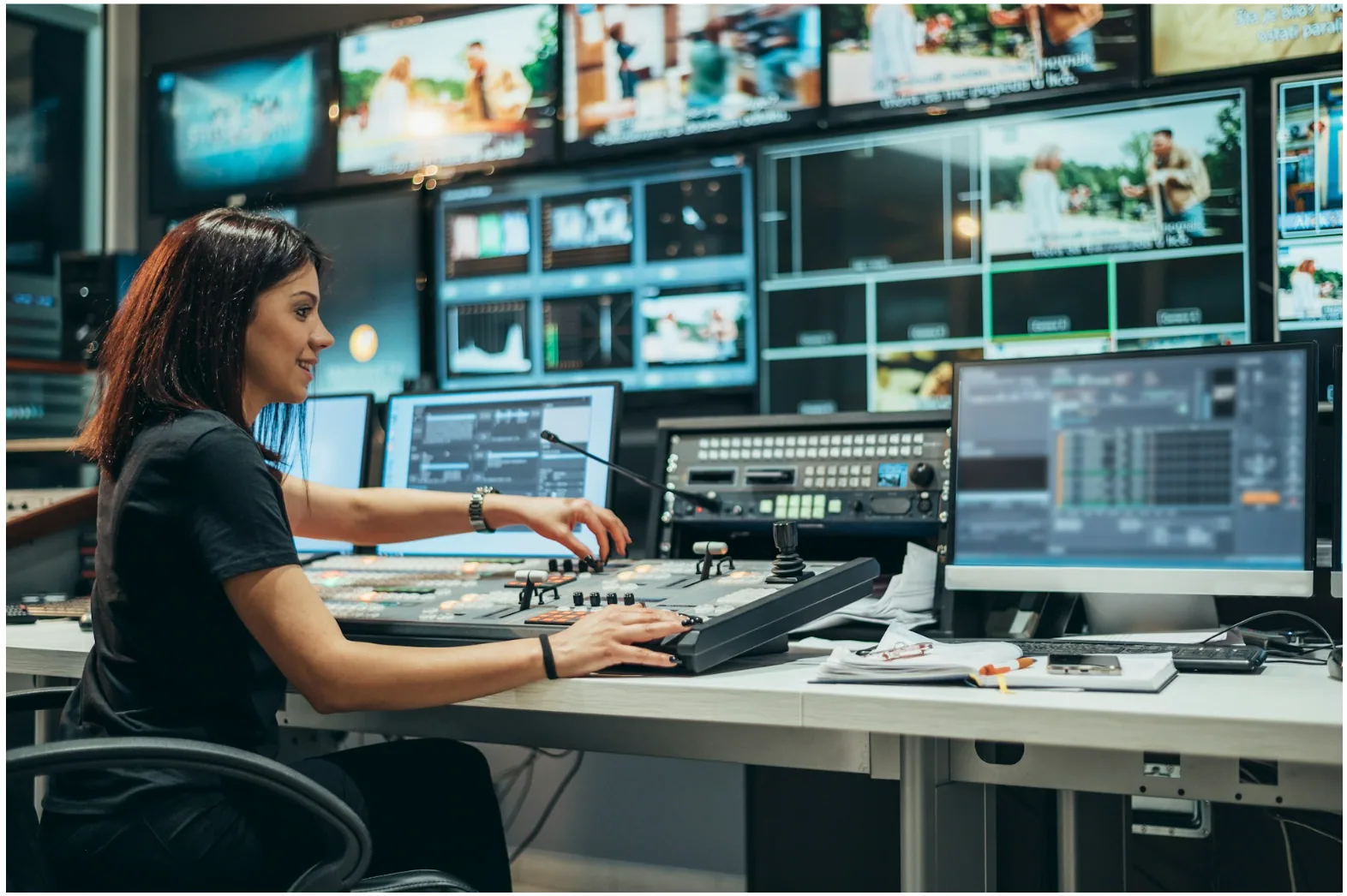
Commercial AV, broadcast, and CATV environments rely on more than a single cable type to move content from one point to another. Behind every video feed, routing system, and distribution network sits a layered infrastructure in which different cables perform different jobs. When signal quality declines or devices fail to communicate properly, the issue often traces back to a misunderstanding of how those layers work together.
One of the most important distinctions in modern media infrastructure lies between signal transport and system control. Control cable serves one purpose, while coax cables, digital coax cable, and fiber optic cable serve others. Understanding how each medium contributes to digital signal transmission helps broadcast engineers, AV planners, network infrastructure professionals, and surveillance designers make more informed specification decisions.
From serial digital video transport to CATV distribution systems and long-distance fiber backbones, each cable type plays a specific role within the overall signal chain.
What Control Cable Does in a Broadcast or AV Signal Environment
In a broadcast or professional AV system, a control cable carries the instructions that allow equipment to communicate and coordinate with one another. Unlike video or audio transport cables, a control cable does not typically carry the media content itself. Instead, it handles the infrastructure's logic layer.
Control cable supports low-voltage command signals between devices such as routing switchers, automation systems, control processors, matrix switches, digital signal processors, touch panels, and monitoring equipment. These communication paths enable operators and automated systems to trigger actions, switch sources, monitor status, and manage signal flow throughout the network.
Without a reliable control layer, the rest of the signal infrastructure becomes difficult to manage. Video signals may still exist on the network, but the devices responsible for routing and coordinating those signals lose the ability to communicate effectively.
Broadcast facilities frequently deploy control cables across equipment rooms, production control rooms, master control centers, and distribution facilities. AV systems use similar architectures in large venues, corporate facilities, command centers, educational campuses, and entertainment environments.
Specification considerations vary according to application requirements. Shielding becomes important in electrically noisy environments where interference may affect low-voltage communication signals. Conductor count can influence compatibility with multi-device control systems, while conductor size often relates to signal distance and communication requirements.
It is also important to distinguish control cable from structured network cabling. While both may support communication between devices, they serve different functions within the overall infrastructure and are not interchangeable.
Coax Cables and Digital Coax in Serial Digital Environments
While control cables govern system coordination, coax cables handle one of the most important jobs in broadcast infrastructure: transporting video signals.
For decades, 75-ohm coaxial cable has served as the foundation of professional video transmission. Even as newer technologies continue to emerge, coax remains deeply integrated into broadcast facilities, production environments, cable TV distribution systems, and CATV networks.
Modern digital coax cable differs from legacy analog video cable because it must support significantly higher bandwidth requirements. Digital video signals require tighter electrical tolerances, consistent impedance, and shielding designs that maintain signal integrity in demanding transmission environments.
Serial digital video standards illustrate this progression. SD-SDI, HD-SDI, and 3G-SDI all transport uncompressed digital video over coaxial infrastructure. As data rates increase, cable performance becomes increasingly important.
HD-SDI wire and cable satellite applications often rely on high-performance digital coax cable to transport video between cameras, switchers, routing systems, monitoring equipment, and transmission infrastructure. Broadcast facilities continue to use SDI because it provides predictable performance and low latency for professional video workflows.
Cable construction directly affects performance. Factors such as conductor composition, dielectric materials, shield coverage, and jacket ratings influence attenuation, return loss, and overall signal reliability. Broadcast environments frequently require plenum or riser-rated cable depending on the specific building requirements.
CATV systems also rely heavily on digital coax cable. In these environments, coaxial infrastructure transports QAM-modulated signals from headend equipment through distribution networks to receivers and display systems. Although streaming and IP-based content delivery continue to grow, CATV architecture remains an important component of many commercial distribution systems.
Digital antenna wire and cable serves another critical function within broadcast and CATV infrastructure. Antenna systems receive RF signals and transport them to receivers, amplifiers, processing equipment, and distribution systems. Signal quality at this stage affects everything downstream, making proper cable selection a significant consideration within the overall architecture.
The continued relevance of coaxial infrastructure demonstrates that emerging technologies do not necessarily replace existing transport methods. Instead, different cable types often coexist within the same environment, each serving a specific purpose.
Where Fiber Optic Cable Fits in the Signal Chain
As signal requirements increase and transmission distances expand, fiber optic cable becomes an increasingly important part of AV and broadcast infrastructure.
Fiber does not replace coax in every situation. Instead, it complements existing signal transport systems by addressing challenges that coaxial cable may not handle as efficiently.
Distance is one of the primary reasons organizations deploy fiber optic cable. Every copper-based transmission medium experiences signal attenuation over distance. As runs become longer, maintaining signal integrity becomes more challenging. Fiber addresses this limitation by allowing data to travel significantly farther while maintaining performance.
Electromagnetic interference represents another major factor. Broadcast facilities often contain large amounts of electrical equipment, power distribution infrastructure, lighting systems, transmission hardware, and processing equipment. In these environments, fiber's immunity to EMI offers a significant advantage.
Fiber optic cable frequently appears in centralized distribution architectures, large venue production systems, headend facilities, inter-building connections, media campuses, and satellite transmission environments. It supports high-capacity transport while reducing concerns related to electrical interference.
Specification discussions often involve multimode and singlemode fiber. Multimode fiber typically supports shorter-distance applications with high bandwidth requirements, while singlemode fiber accommodates significantly longer transmission distances. System designers evaluate distance requirements, bandwidth demands, and equipment compatibility when determining which fiber architecture best fits a project.
In many facilities, fiber and coax work together rather than compete. Conversion equipment bridges the two mediums, allowing signals to move efficiently between local coaxial networks and larger fiber backbones. This hybrid approach gives organizations flexibility while supporting evolving infrastructure requirements.
Specifying the Right Cable Type for the Application
One of the most common misconceptions in AV and broadcast infrastructure planning is the assumption that a single cable type can meet all requirements. In reality, control cable, coaxial cable, and fiber optic cable represent complementary layers within a larger signal ecosystem.
Control cable functions as the command layer. It supports communication between processors, automation systems, routers, switching equipment, and endpoint devices. Without reliable control infrastructure, operators lose visibility and coordination across the system.
Coaxial cable serves as the signal transport layer for many video applications. Digital coax cable continues to support serial digital workflows, CATV distribution networks, cable TV systems, and digital antenna wire and cable applications where its performance characteristics align with operational requirements.
Fiber optic cable serves as the high-capacity backbone. Its resistance to interference and ability to support longer distances make it a practical choice for larger infrastructures where traditional copper transmission reaches its limitations.
Successful specifications account for several variables across all cable types. Jacket ratings remain important for compliance with building requirements. Shielding considerations depend on the surrounding electrical environment. Conductor and transmission characteristics must align with the signal type being carried.
When cable specifications fail to match application requirements, problems can appear throughout the infrastructure. Control signals may become unreliable. Video transmission quality may degrade. Bandwidth limitations may affect overall system performance. These issues rarely originate from a single component. More often, they result from mismatches between the cable type and the role it is expected to perform.
For AV system planners, broadcast engineers, and infrastructure professionals, understanding the relationship between these cable categories creates a stronger foundation for specification decisions and long-term system reliability.
Reliable signal transmission depends on recognizing that control cable, coaxial infrastructure, and fiber optic networks each contribute something unique to the overall architecture. Control systems coordinate operations, coax carries critical video signals, and fiber extends network reach while supporting high-bandwidth transport across larger environments.
For additional information about AV infrastructure topics, visit the AV Resource Center. Readers exploring video transmission technologies may also find value in this previous blog post, which examines cable considerations for modern broadcast workflows.
Teams evaluating cable specifications, signal distribution architectures, or project requirements can also contact our team to discuss broader infrastructure considerations and available resources.
