Cat6a vs. Cat6: Specs, Shielding, and When to Upgrade
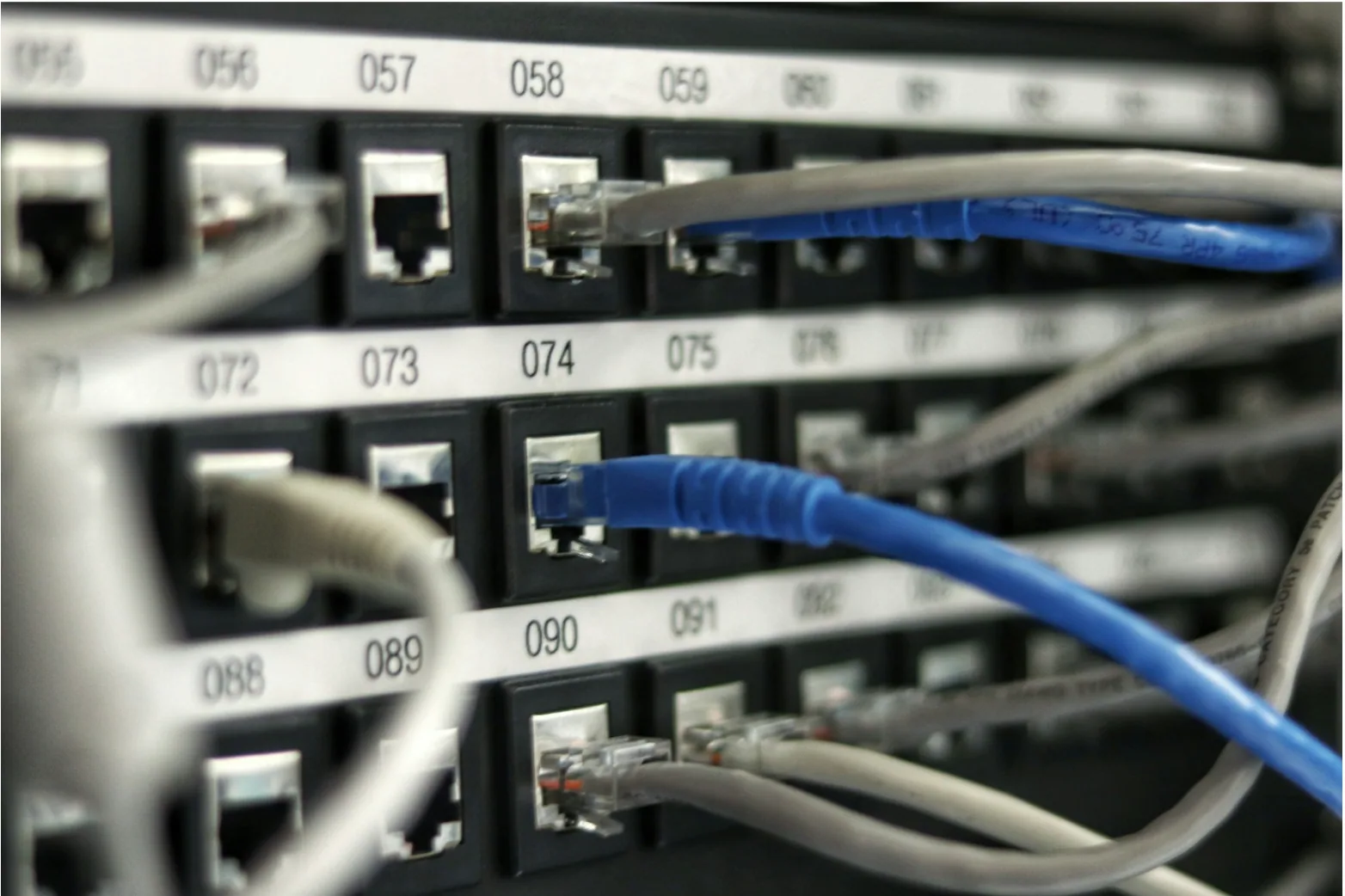
Choosing between Cat6 and Cat6a Ethernet cable is one of the most consequential decisions a procurement or design team makes when specifying cable for a commercial or data center build. The two categories look similar on a spec sheet, but the differences in bandwidth, shielding, and channel distance affect what a network can actually support today and how much headroom it has as device loads grow. This comparison walks through the specs that matter most when deciding which category fits a given project.
Cat6a vs. Cat6 Bandwidth and Speed
The core difference between the two categories comes down to frequency. Cat6a is rated to operate at up to 500 MHz, twice the 250 MHz ceiling of standard Cat6. That additional headroom is what allows Cat6a to sustain 10 Gigabit Ethernet (10GBASE-T) across a full 100-meter channel. Cat6 can technically carry 10G traffic, but only over much shorter runs, typically in the range of 37 to 55 meters, before performance drops back to 1 Gigabit speeds.
For commercial and data center environments where full-length runs are common, that distance limitation makes Cat6a the more reliable choice for guaranteed 10G performance. Procurement and design teams working with Cat 6a Ethernet cable specs should treat the 100-meter, full-bandwidth guarantee as the baseline expectation, not a best-case scenario.
Shielded Cat6a Cable and Noise Performance
Higher frequency comes with a tradeoff: increased sensitivity to alien crosstalk, the electromagnetic noise that couples between adjacent cables in a bundle or pathway. This is the performance challenge that defines Cat6a in dense cable environments, and it's the reason shielded Cat6a cable options exist alongside unshielded versions.
Shielded Cat6a, typically built as F/UTP or S/FTP construction, wraps the twisted pairs in a foil or braided shield to reduce noise coupling. Unshielded Cat6a (UTP) relies on tighter pair geometry and cable design alone to manage crosstalk. Shielding can improve noise immunity, but its effectiveness depends heavily on proper grounding and termination quality. A shield that isn't grounded consistently across a run can perform worse than a well-designed unshielded cable.
Shielded Cat6a is generally specified in environments with dense cable pathways, proximity to electrical equipment or other noise sources, or high-density commercial and data center runs where crosstalk risk is elevated. Cat 6a in unshielded form remains a practical choice for lower-noise environments where budget and cable size are bigger considerations than added EMI protection.
Cat6a vs. Cat6 Cable Size and Channel Distance
Managing crosstalk at higher frequencies requires more material: larger twisted pairs, thicker jackets, and in many constructions, a separator between pairs. As a result, Cat6a cable typically has a noticeably larger diameter than Cat6, which affects how much cable fits into a given raceway, conduit, or cable tray.
Distance performance isn't automatically uniform across every Cat6a product, either. Some smaller-diameter Cat6a cables, designed to reduce bulk, may not support the full 100-meter channel length at full 10G bandwidth, particularly when carrying Power over Ethernet loads. Teams speccing cable for long runs or high-density pathways should confirm that a given Cat6a product supports full-length, full-bandwidth performance under the load conditions the project requires, rather than assuming all Cat6a cable performs identically at 100 meters.
Power over Ethernet and Multi-Gig Considerations
Cat6a's improved thermal design plays a direct role in Power over Ethernet capacity. Traditional cable construction can trap heat within each twisted pair when carrying PoE current, creating hotspots that limit safe power delivery. Newer Cat6a designs distribute heat more evenly across the cable, which allows some products to deliver up to 100 watts of PoE while keeping thermal rise within acceptable limits.
This matters for commercial deployments carrying a growing number of powered devices, including cameras, wireless access points, and other network-connected equipment. Cat6 can support PoE, but Cat6a's higher bandwidth and improved thermal handling give it more capacity to support current device loads and the higher-bandwidth applications commercial networks are increasingly expected to carry.
When to Upgrade to Cat6a
The decision between Cat6 and Cat6a comes down to what a given build actually needs. Cat6a is the stronger choice when a project requires guaranteed 10G performance across full 100-meter channels, supports a high density of PoE-powered devices, or runs through environments with elevated electromagnetic noise where shielded construction adds value. Data centers, server rooms, and commercial buildings with dense device deployments are common examples.
Cat6 remains a practical option for shorter runs, lower-bandwidth requirements, or budget-conscious builds that don't currently need 10G capacity. The right choice depends on matching cable specs to the project's actual bandwidth, distance, and device load requirements rather than defaulting to the higher category across the board.
Sourcing Cat6a Cable for Commercial and Data Center Projects
Our team manufactures Cat6a cable built to support full-bandwidth, full-distance performance for commercial and data center runs, in both shielded and unshielded constructions. For additional technical specs and application guidance across category cable products, visit the category cable resource center. Procurement and design teams working through a Cat6a specification can contact our team directly for product details and quote requests.
