Cable Tray vs. J-Hooks vs. Conduit: A Comparison
Commercial and industrial low-voltage runs need a way to get from point A to point B safely, and that means choosing a support system. The three most common options are cable tray, J-hooks, and conduit, and while all three exist to keep cable organized and off the floor, they are not interchangeable. Each carries its own code classification, load expectations, and best-fit environment. This comparison breaks down how the three stack up so procurement teams, contractors, and specifiers can match the right system to the job in front of them.
What Sets These Three Support Systems Apart
The biggest distinction among cable tray, J-hooks, and conduit comes down to how much protection the cable actually gets. Cable tray and J-hooks both support exposed cable along an open pathway, while conduit fully encloses the cable inside a raceway. That difference matters because codes treat exposed and enclosed cable differently, and it shapes which cable types are permitted in each system and how much mechanical protection the run has against damage. Cost, flexibility for future changes, and the physical environment of the run all factor into which system fits best, and none of the three is a universal answer.
Cable Tray: Code Classification, Types, and Load Considerations
The National Electrical Code classifies cable tray as a support system rather than a raceway, which is a meaningful distinction. Because tray-supported cable stays exposed, it carries more risk of mechanical damage than cable enclosed in a raceway, and NEC Article 392 sets the specific requirements for which cable types are permitted in a tray, along with spacing and loading rules. Tray comes in several configurations, including basket, ladder, and solid-bottom styles, and is manufactured from materials like aluminum, steel, and nonmetallic composites depending on the environment. Flame testing, most commonly UL 1685, is part of how cable earns tray-rated status. Tray tends to fit best on larger commercial and industrial runs carrying multiple cables at once, particularly where a project anticipates future access or changes to the pathway.
J-Hooks: Spacing, Support Limits, and Where They Fit
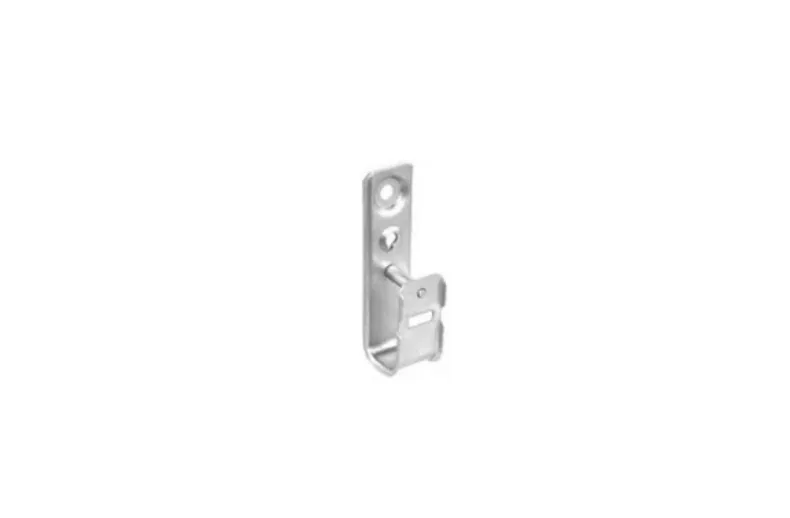
J-hooks offer a lighter-duty, lower-cost alternative for smaller to mid-size cable bundles, and their ease of relocation makes them a practical fit for spaces that change over time. The ANSI/TIA-569 standard calls for J-hooks to be spaced no more than five feet apart. Spacing them too far apart lets cable sag, which can lead to abrasion and added stress on the jacket, while spacing them too close together drives up material and labor costs without adding real benefit. J-hooks are a common choice above drop ceilings and in general office and light commercial environments, where full enclosure is not required but organized, elevated support is.
Conduit: When Full Enclosure Is the Right Call
Conduit stands apart from tray and J-hooks because it fully encloses the cable rather than simply supporting it along an open path. That enclosure buys physical protection that the other two systems cannot match, which makes conduit the right call in environments with a higher risk of mechanical damage or where code requires a fully enclosed raceway for a given occupancy or application. The tradeoff is flexibility. Once cable is run through conduit, making changes or adding capacity later takes more effort than it would with an open tray or a row of J-hooks.
How These Pathways Connect to Structured Cabling
Whichever support system carries a given run, the cable eventually reaches a termination point, and that is where structured cabling components come into play. Runs pulled through trays, J-hooks, or conduit typically terminate at a patch panel, where individual conductors are secured with a punch-down tool to complete the connection. The pathway decision and the termination method are separate parts of the same system, but they need to work together. A pathway chosen without considering how the cable will terminate can create headaches downstream, so it is worth thinking about both ends of the run at the same time.
Comparing Cable Tray, J-Hooks, and Conduit at a Glance
Cable Tray | J-Hooks | Conduit | |
Code classification | Support system (NEC Article 392) | Support system | Enclosed raceway |
Cable protection | Exposed, tray-rated cable required | Exposed, spacing-dependent | Fully enclosed |
Typical spacing/load rule | Set by Article 392 loading requirements | Every 5 ft per ANSI/TIA-569 | Governed by raceway fill limits |
Best-fit setting | Large commercial or industrial runs with multiple cables | Drop ceilings, office and light commercial spaces | Higher-risk environments or code-mandated enclosure |
Flexibility for changes | High | High | Lower |
No single system wins across every category. The right choice depends on the specific run, the cable it carries, and the environment it passes through.
Sourcing Cable Support Accessories for Commercial Projects
Once a project's pathway needs are clear, sourcing the right accessories is the next step. Windy City Wire carries J-hooks and a range of conduit and cable fittings suited to commercial and industrial low-voltage projects. Visit the AV resource center for additional guidance on structured cabling components, or contact the team directly to talk through spacing, capacity, or code questions specific to your project.
