Beyond the Install: Building Recurring Revenue with Public Safety Network Testing

For low-voltage contractors, fire alarm integrators and RF integrators, a public safety network installation can be the beginning of the customer relationship—not the end.
From pre-installation surveys and acceptance testing to annual grid testing, maintenance and troubleshooting, testing needs continue throughout the lifecycle of the system. And for contractors equipped to support those needs, that creates an opportunity to build recurring service revenue long after the initial install is complete.
In a recent webinar with iBwave, we explored how contractors can expand their role across the public safety lifecycle and bring more testing work in-house.

The opportunity goes beyond the initial install
Testing and validation support public safety systems at multiple stages—not just when a new system is commissioned.
For contractors, that can mean opportunities tied to:
Pre-installation: site surveys, grid testing and coverage validation
New system installation: acceptance testing and post-install grid testing
Renovations and expansions: coverage verification and updated reporting
System modifications: coverage revalidation and additional acceptance testing
Existing systems: annual grid testing, maintenance and troubleshooting
Annual grid testing and ongoing maintenance are particularly important because they can turn a one-time project into a longer-term service relationship. Contractors also don’t necessarily have to perform the system installation to participate. An initial grid test or site survey can offer an entry point into public safety work without taking on the full installation.
Why ongoing testing matters
Public safety coverage isn’t something that can simply be validated once and forgotten.
Buildings change. Renovations happen. Systems are modified. Batteries age. New structures or changes in the surrounding RF environment can affect signal conditions.
Testing is also driven by applicable codes and local Authority Having Jurisdiction (AHJ) requirements. IFC Section 510 and NFPA 1225 are key references for emergency responder communication systems, but local requirements can vary significantly.
Typical testing and maintenance considerations may include:
Coverage verification
Grid testing across general and critical areas
BDA functionality
Donor antenna operation
Backup battery testing
Alarm and supervisory signal verification
Updated AHJ documentation
Because requirements can vary from one jurisdiction to another, contractors should always confirm the applicable code edition and local AHJ expectations before testing.
The revenue may already be hiding in plain sight
For many contractors, the opportunity isn’t necessarily about finding a new customer. It can come from services surrounding public safety systems they already install, support or subcontract.
Typical service opportunities can include:
Pre-install grid test: approximately $3,000–$4,000
Pre-install survey: approximately $2,000–$3,000
Acceptance test: approximately $3,000–$5,000
Post-install grid test: approximately $3,000–$4,000
Annual grid test: approximately $3,000–$4,000 per year
Troubleshooting visit: approximately $1,000–$3,000 per visit
These are estimates and may vary by state, market, project scope and square footage.
The important difference is that some of these services are tied to the initial project, while others continue after the system is installed. Annual grid testing and troubleshooting can create an ongoing service opportunity over the life of the building.
Why some contractors have been avoiding testing
If these service opportunities already exist, why aren’t more contractors performing the work themselves?
For many companies, the barrier has been the equipment and expertise traditionally required.
Conventional testing workflows can involve expensive scanners, laptops, cables and additional test equipment. A complete field kit can easily become heavy and cumbersome, while the software and RF knowledge required to operate it can add another layer of complexity.
Common barriers include:
High upfront equipment costs
Large, heavy field-testing kits
Complex software
Specialized RF knowledge
Training and certification requirements
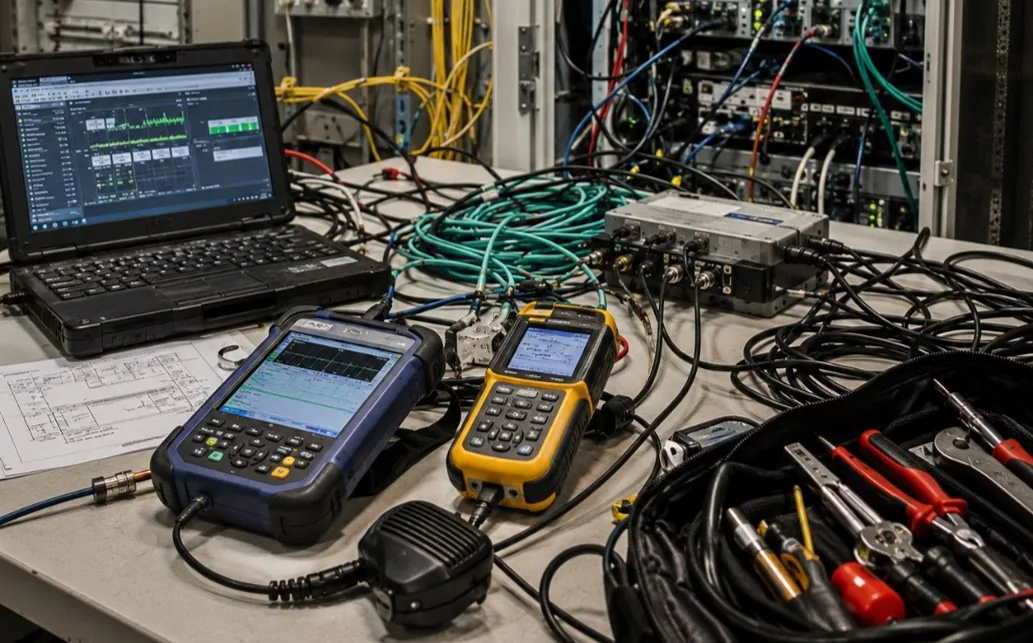
For smaller teams—or companies that only perform a limited number of tests each year—outsourcing can seem like the easiest path.
But there are tradeoffs.
When testing is subcontracted, the contractor gives up some control over scheduling, gives away part of the service revenue and brings another company into the customer relationship.
Making testing more practical in the field
Newer testing tools are helping reduce some of those barriers.
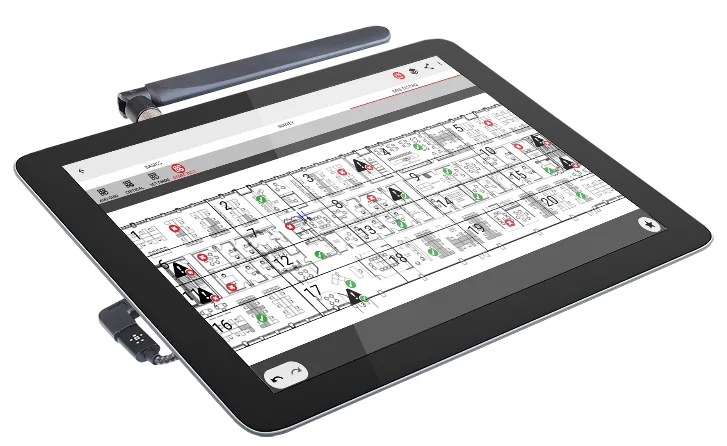
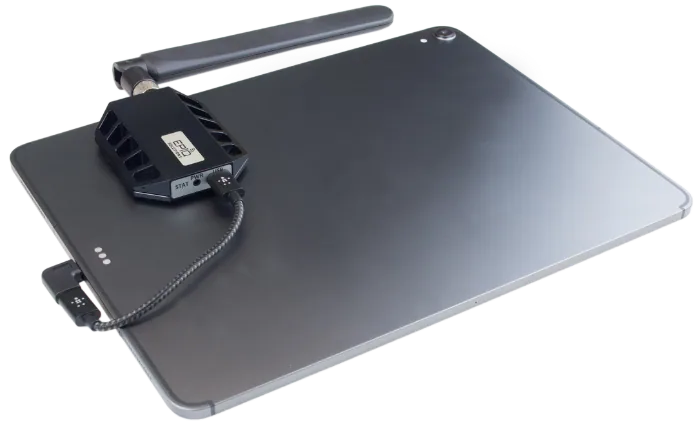
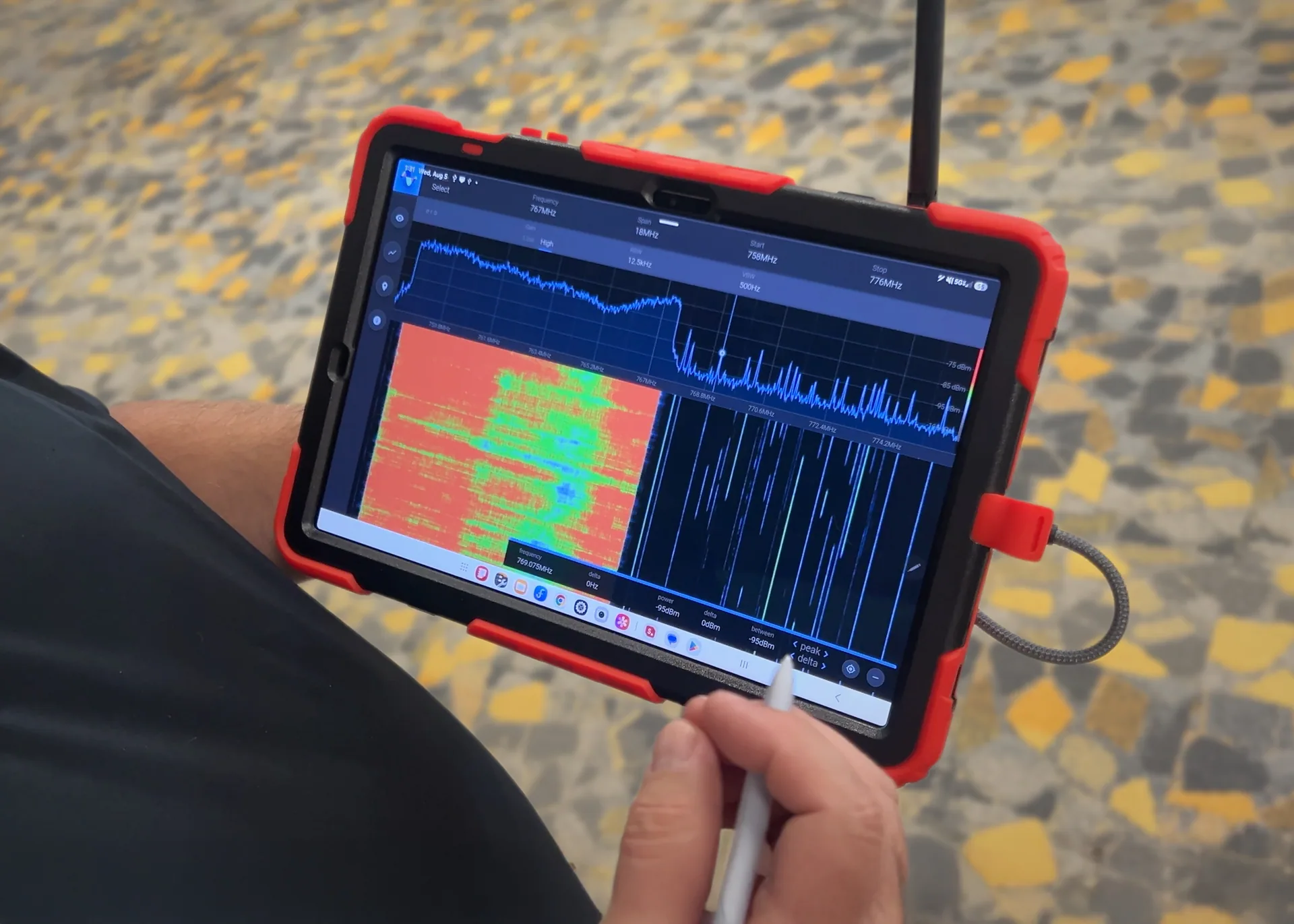
Compact scanning hardware paired with simple software can replace much of the bulky equipment traditionally associated with public safety testing. Instead of moving through a building with a large test kit, technicians can work from tablets and handheld scanners
The bigger advantage is the workflow around the hardware.
A technician can import a floor plan, establish test grids and critical areas, collect measurements and generate reporting directly from the field.
The same workflow can also capture:
Photos of equipment rooms and site conditions
Notes and annotations
Potential equipment locations
Cable routes
Survey measurements
Grid-testing results
That information can then move directly into the next phase of the project rather than being manually recreated when the technician gets back to the office.
Field data can also be connected with the design workflow, helping teams reduce post-processing and move more efficiently from survey to design.
Connecting the field, office and customer
Improving the testing process isn’t only about saving a technician a few steps in the field.
The real value comes from making the information collected on site useful across the organization.
Once survey and testing data is captured digitally:
Technicians can complete testing and reporting in the field.
Design teams can work from the collected site information.
Project teams can access current survey and testing data.
Sales teams can quickly provide reports to customers.
Customers, GCs and AHJs can receive documentation without unnecessary delays.
Cloud-based project management can further simplify how that information moves between teams, creating a more connected workflow between field testing, reporting and design.
That matters because every additional manual handoff adds time—and every disconnected tool creates another opportunity for information to be lost or duplicated.
Think lifecycle, not just project
The bigger opportunity isn’t simply owning another piece of test equipment.
It’s being able to support more stages of the customer’s public safety lifecycle.
A relationship may begin with a pre-install grid test or survey. From there, it can extend into acceptance testing and post-install validation. Once the system is operational, the same customer may need annual grid testing, troubleshooting, renovations, system modifications and future coverage validation.
In other words:
One installation can create multiple service opportunities over the life of the building.
For contractors already serving public safety customers, the growth opportunity may not require finding entirely new customers. It may simply mean capturing more of the testing and service work surrounding the systems they already support.
And bringing that work in-house can offer more than additional revenue. It can give contractors greater control over scheduling, reduce their reliance on subcontractors and help keep the customer relationship within their own organization.
What can that look like financially?
As one illustrative example, the business case modeled a three-year solution cost of approximately $24,000, with average project revenue of about $7,700 and average recurring revenue of about $4,000.
Under those assumptions:
3 projects per year: approximately $45,000 in three-year net return
8 projects per year: approximately $160,000
15 projects per year: approximately $320,000
The example suggests that, depending on project volume, the initial investment could potentially be recovered within the first few projects.
See how the complete workflow works
Want to take a closer look at the opportunity?
Watch the on-demand Windy City Wire and iBwave webinar, Turning Public Safety Installs into Recurring Revenue with Simpler Surveys & Grid Testing, for a deeper look at:
Public safety testing opportunities across the system lifecycle
Grid-testing and AHJ considerations
The barriers that have traditionally kept contractors from self-performing testing
A live public safety survey and grid-testing workflow
The business case for bringing more testing capabilities in-house
For teams interested in self-performing more of this work, Windy City Wire also offers the iBwave Mobile Survey + Epiq PRiSM scanner solution, combining field surveying, grid testing, validation, reporting and integration with the broader iBwave workflow