SmartFIBER: Purpose-built Fiber for Modern Low-Voltage Systems
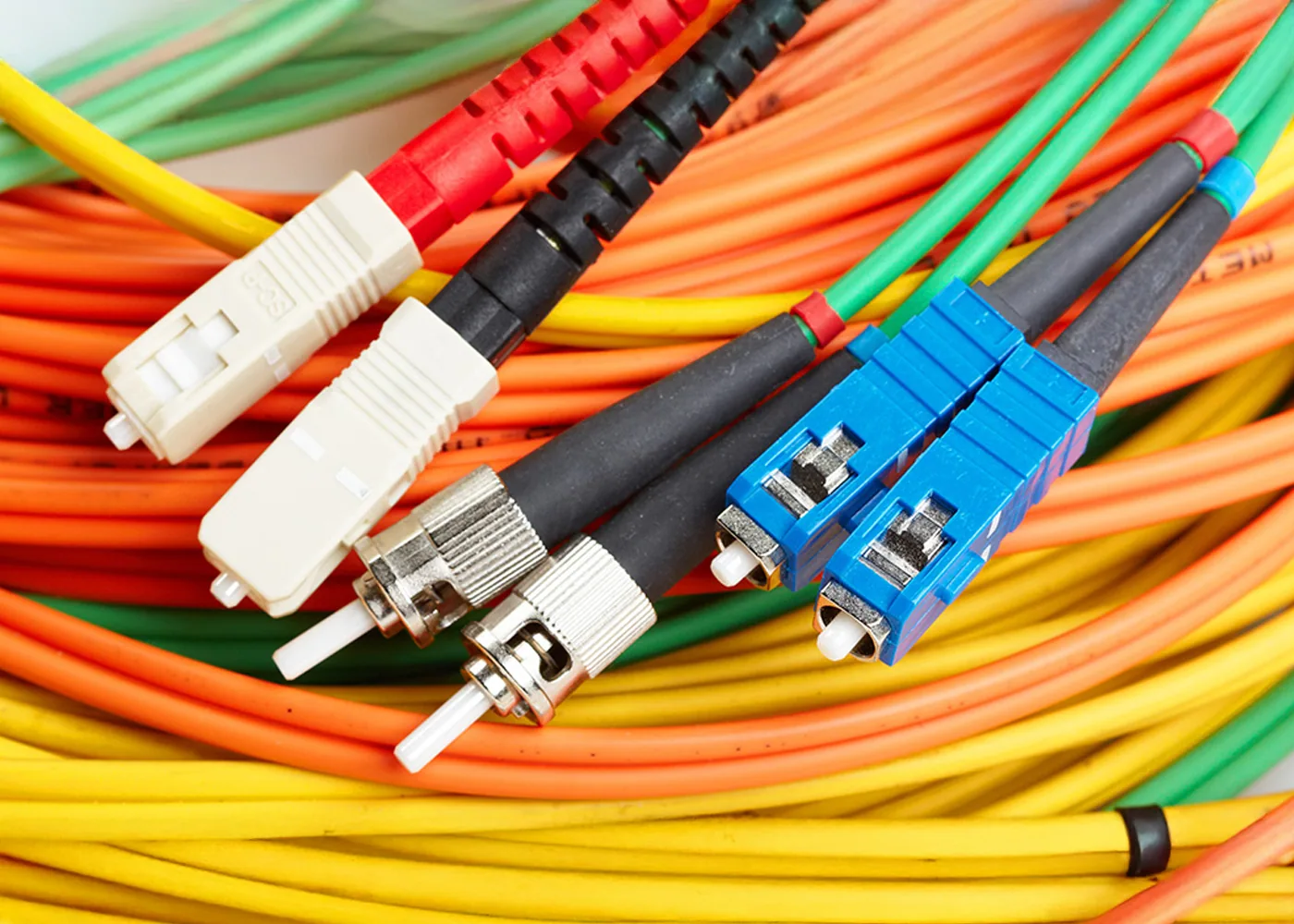

Fiber is playing a larger role in low-voltage infrastructure as more systems converge on IP and as bandwidth, distance, and reliability demands climb. Enterprise networks, AV over IP, IP video surveillance, access control, building automation, transportation, and industrial control systems are scaling in complexity and throughput. Copper still carries significant workloads, but where long runs, EMI immunity, and high-speed backbones are involved, fiber has become the trusted medium. It delivers stable performance across extended distances, maintains signal integrity in electrically noisy environments, and aligns well with plenum and mixed-use pathways common to commercial and industrial facilities.
Windy City Wire’s SmartFIBER portfolio was developed for these realities. It brings together U.S.-manufactured fiber distribution cables and an ecosystem of compatible accessories to streamline specification, installation, and long-term service. The products are designed for the needs of low-voltage technicians and installers: practical constructions, proven materials, consistent availability, and field-ready features that help control labor and reduce variability from project to project.
A Practical Approach to Fiber in Low-Voltage Environments
SmartFIBER centers on tight-buffered distribution cables in the most common fiber types and strand counts used by commercial and industrial teams. Multimode and singlemode options are offered in constructions engineered for in-building plenum spaces, with indoor/outdoor variants that make it simpler to cross the building boundary through protected pathways without adding unnecessary transitions. The all-dielectric designs eliminate grounding and bonding complexity while resisting electromagnetic interference—critical when routing through spaces that also host power distribution or motor control equipment.
Just as important, SmartFIBER fits into the rhythms of field work. Factory-applied jacket lubrication reduces pulling friction through conduit and crowded trays. Footage markings make it easier to plan pulls and track remaining lengths, helping control waste. Jacket color conventions and clear print legends support faster identification and documentation. The result is a portfolio that aligns to code, reduces surprise labor, and supports reliable performance across the full lifecycle of a system.
Where SmartFIBER is Put to Work
Across commercial buildings and campuses, SmartFIBER often serves as the backbone between MDF and IDFs, aggregating network uplinks along with IP video, access control, and AV transport. In venues such as arenas, convention centers, casinos, and higher education facilities, it provides the distance and signal integrity needed for AV over IP, broadcast distribution, and production workflows. Municipal and transportation projects use SmartFIBER for traffic and ITS networks, while industrial and OT environments leverage its EMI immunity and scalability to segment and backhaul plant networks. Building automation systems use it to connect controllers and supervisory devices over long runs without introducing noise or latency issues.
Portfolio overview
Multimode OM3 50/125 distribution cables are available in common strand counts such as 4, 6, and 12. These laser-optimized constructions are a workhorse for high-speed, in-building distribution and campus-length runs within OM3 optics specifications. The tight-buffered format simplifies termination and management in patch panels and enclosures, while plenum-rated options enable use in return-air spaces. Many teams choose OM3 to standardize on 10 Gb in-building links and to leave headroom for future upgrades with appropriate optics.
Multimode OM1 62.5/125 distribution serves facilities with legacy multimode plants and optics. It provides a practical path for expansions and retrofits where OM1 infrastructure is already in place. Plenum-rated indoor/outdoor variants help reduce mid-span transitions when entering the building envelope via protected conduit.
Singlemode 9/125 distribution cables are the choice for long-distance and future-focused backbones. With extended reach and low attenuation, singlemode links building-to-building runs across campus, connects industrial facilities to central control, and supports growth to higher speeds and wavelength services over time. The tight-buffered format and all-dielectric design keep terminations straightforward and EMI concerns minimal.
SmartFIBER in ProAV and Converged AV/IT
Professional AV has shifted decisively toward IP transport, and that has expanded fiber’s role in stadiums, arenas, convention centers, worship facilities, higher education, and corporate campuses. High-bitrate media moves easily over longer distances with low latency and without susceptibility to electrical noise. SmartFIBER provides plenum-rated multimode and singlemode options with installation features that make long pulls through conduit and crowded pathways more manageable. In headend rooms and IDFs, high-density patching with LC or MPO cassettes supports scalable deployments that can grow without reworking the entire plant. For facilities that also host broadcast or production, SmartFIBER’s distribution constructions streamline fan-out and termination while maintaining bend-radius control and physical protection inside enclosures.
How SmartFIBER Supports the Complete Field Systems Solution
Windy City Wire’s Complete Field Systems Solution is about aligning products, packaging, and processes to reduce labor and improve consistency across the job. SmartFIBER is a core part of that approach.
Manufacturing and availability: SmartFIBER is produced as part of Windy City Wire’s SmartWire family to drive consistency and reliable lead times for commercial and industrial projects.
Installation efficiency: Factory-applied Glide Technology on cable jackets helps reduce pulling friction, supporting safer pulls through conduit and long pathways. This lowers the chance of jacket damage and helps crews complete runs with fewer stops.
Planning and waste reduction: Footage markings (FastFIND) on select SmartFIBER constructions support run planning, documentation, and better use of what’s left on the reel. That translates into fewer partial lengths left over and more predictable material usage across large jobs.
Packaging and handling: As part of the broader system, Windy City Wire’s jobsite-ready packaging and transport solutions—such as the RackPack—help keep reels organized, mobile, and protected. Crews can stage and move materials efficiently, then feed cable smoothly from a stable platform without improvised stands.
End-to-end ecosystem: Cables, connectors, adapter plates, and enclosures are built to work cohesively. Standardized interfaces and accessories simplify procurement, training, and field documentation. From pre-term assemblies to field-terminated links, the ecosystem supports the methods that low-voltage teams rely on every day.
Common SmartFIBER Deployment Scenarios
In a single building, OM3 distribution trunks often carry uplinks from the MDF to each IDF, aggregating switch backbones, AV transport, and supervisory BAS connectivity. Enclosures at each end maintain bend radius and route trunks and jumpers cleanly, while LC or MPO cassettes support density and neat patch fields.
On a campus, singlemode 12-strand distribution is frequently used to link buildings through conduit between an MDF and remote IDFs. Spare strands provide resilience and enable growth to additional circuits or services over time without repulling. The same approach applies to industrial sites with dispersed facilities, where singlemode links help segment OT networks from IT while enabling high-uptime paths between control rooms, production lines, and data aggregation points.
Security networks present another common use case. Fiber rings connecting headends, remote IDFs, and camera aggregation switches provide predictable performance for IP video. Whether built on OM3 or singlemode, these rings often reserve spare fibers for failover paths and future devices. In venues or multi-building facilities, mixed indoor/outdoor plenum constructions help bring trunks into the building and continue through plenum spaces without mid-span changes that add loss and time.
Why These Details Matter Over the Project Lifecycle
The real test of a fiber system comes after turn-up, when documentation, labeling, and physical management determine how quickly changes can be made and issues can be diagnosed. SmartFIBER’s focus on tight-buffered distribution, jacket identification, footage markings, and clean integration with LGX-style hardware supports that lifecycle. It helps maintain bend radius and strain relief in crowded racks. It simplifies adds, moves, and changes without compromising the physical plant. It keeps interfaces consistent so new team members can step into a site and follow a familiar pattern.
From pull to patch—and eventually to expansion—SmartFIBER fits into a disciplined, repeatable way of building low-voltage infrastructure. That alignment with field realities is what ties it directly to Windy City Wire’s Complete Field Systems Solution: materials, packaging, and processes that save steps, reduce guesswork, and keep projects moving on schedule.
For specification support, detailed submittals, and help selecting the right SmartFIBER cable, connectors, and enclosures for upcoming projects, the Windy City Wire team is ready to assist. Reach out to the team for more information about SmartFIBER and to align configurations with performance, code, and labor goals.
