Enclosures That Make Installs Look Pro: Wall-Mount and Rack-Mount Best Practices
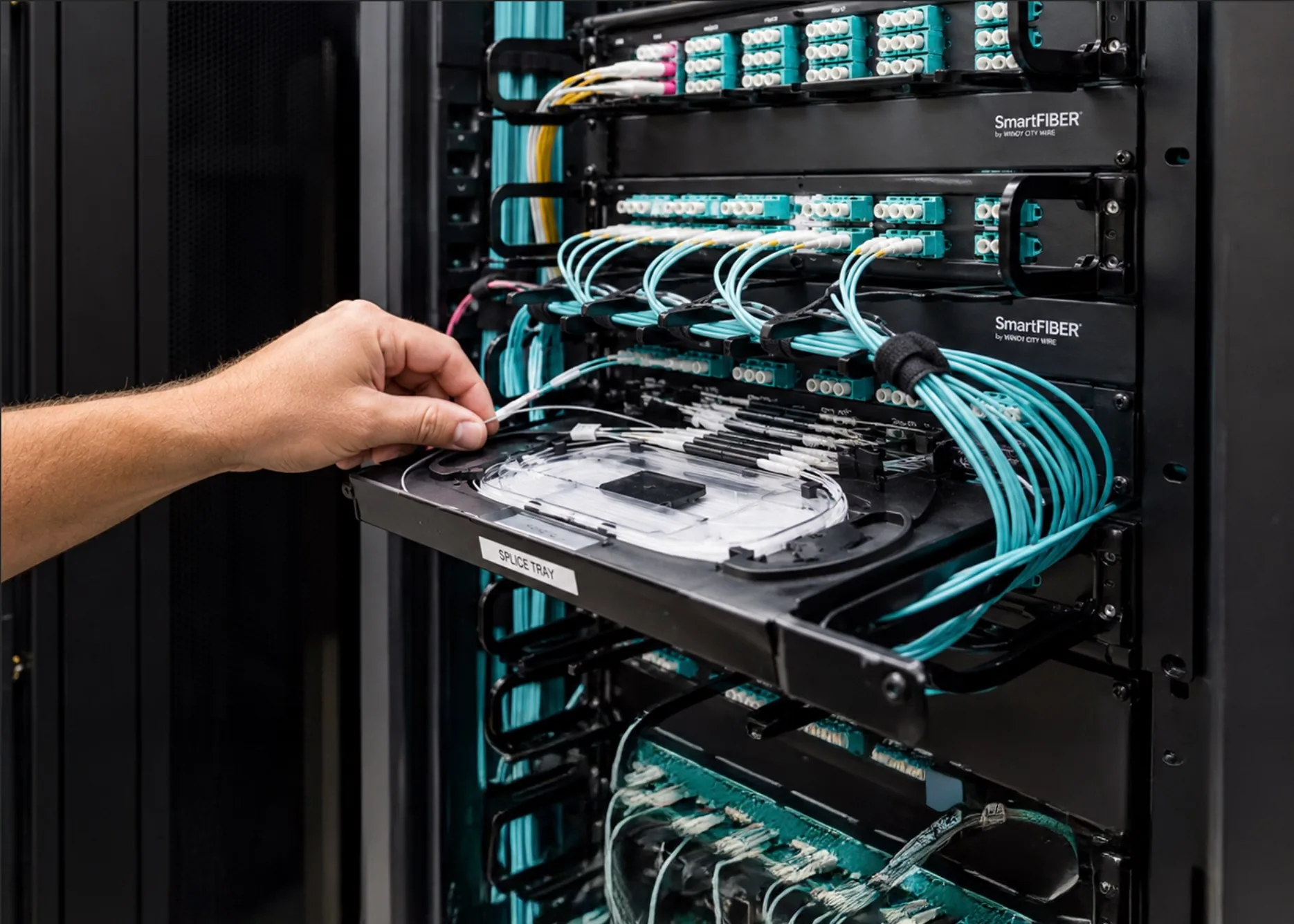

SmartFIBER enclosures create clean, serviceable fiber handoffs that support bend control, strain relief, and clear labeling, helping teams streamline cable management and prepare for inspections. Our rack-friendly chassis accept up to three LGX-style panel inserts and include integrated front and rear cable management to separate trunks from jumpers for orderly routing and maintenance. Pairing these enclosures with SmartFIBER cable offerings and accessories standardizes terminations and documentation across sites.
Choose the Right Enclosure: Rack-Mount vs. Wall-Mount, Density, Access, Security
Application and location drive the enclosure choice. Rack-mount SmartFIBER enclosures with 3-LGX capacity support modular adapter plates or cassettes and provide front and rear cable management for disciplined routing in MDF/IDF racks and cabinets. Where space is constrained or termination points sit outside standard racks, select wall-mount or compact enclosures; panel format guidance for rack versus wall deployments is outlined in our Multimode Panels & Couplers category.
For high-density environments, LC-based plates and cassettes enable compact port counts while maintaining serviceability. Clear front-access patching accelerates moves, adds, and changes without disturbing adjacent links—critical in active rooms and cabinets. Where physical security is required, specify lockable wall-mount enclosures or place rack-mount enclosures within lockable cabinets to control access.
Patch vs. Splice: Building Reliable Termination Workflows
SmartFIBER enclosures support patch-only, splice-only, or hybrid splice-and-patch workflows. For pre-terminated trunks or field-terminated pigtails, populate LGX adapter plates to build a defined patch interface. For OSP-to-ISP transitions or cable construction changes, add splice trays and pigtails to consolidate splicing and patching in one chassis. The 3-LGX architecture allows mixing adapter plates and cassettes (LC, SC, MPO/MTP via cassettes) to match optics and device ports while reserving growth capacity.
Hybrid workflows in a single chassis: load LGX splice trays and adapter plates together to manage splicing, patching, and cross-connects with bend control and strain relief.
High-density patching: prefer LC for density; use SC where legacy or device-specific requirements apply.
Tray Management, Slack Storage, and Bend Control
Passing inspection and preserving optical budgets begin with disciplined pathway management inside the enclosure. The integrated front and rear cable management in our enclosures maintains bend radius, organizes service loops, and protects connectors—reducing rework and helping preserve optical performance during installation and service. Clear separation of trunks (rear) from jumpers (front) keeps routes traceable for testing, certification, and changes. Use consistent slack storage standards per tray and per service so technicians can access splices and ports without stressing adjacent fibers.
Maintain bend radius with built-in guides and routing features to mitigate microbends and accidental strain during MAC work .
Organize slack and service loops to speed inspection and future troubleshooting.
Labeling (TIA‑606), Color Coding, and Documentation Workflows
Labeling to TIA-606 principles supports verification, serviceability, and audit trails. Use a consistent, site-wide identifier scheme for racks, panels, and ports; label both ends of every link; and record mappings in your documentation set. At the enclosure, use the provided labeling space and port-group organization to present a clean, traceable patch field. For color coding, standardize jacket colors and stripes to distinguish media types, services, and diverse paths; SmartWire supports custom jacket and stripe options to align with your documentation and quality-control standards.
Recommended workflow:
Assign consistent identifiers (e.g., MDF-IDF-room-rack-U/port), apply machine-printed labels, and mirror numbering on adapter plates.
Capture as-builts with port maps, cable schedules, and photos.
Baseline performance with light source/power meter and OTDR traces; store results per link for future reference .
Use SmartWire’s FastFIND footage markers and RackPack delivery to reduce waste and improve traceability during pulls, aiding closeout package accuracy.
Compliance and Inspection Readiness
A structured, labeled patch field backed by controlled routing, slack management, and bend-radius protection aligns with industry best practices and inspection checklists. The SmartFIBER enclosure platform provides a protected handoff for patching, splicing, and cross-connects; integrated management reduces accidental stress and keeps pathways easy to trace for certification and future maintenance. Clear front-access and standardized LGX hardware ensure repeatable layouts across sites, simplifying training, testing, and documentation retention.
For environments requiring enhanced mechanical protection or survivability on approach to the enclosure, SmartGUARD protective jacketing can reduce the need for metal conduit while supporting applicable survivability requirements; see our SmartGUARD DAS Cable video for an overview [link]
Putting It All Together with Windy City Wire
Combine SmartFIBER enclosures, adapter plates, and splice trays with SmartWire fiber to create unified, standards-aligned patch points that support density targets and clear documentation. Use Multimode Panels & Couplers for LC/SC adapter selections and rack vs. wall format planning, and use Singlemode Panels & Couplers for OS2 backbones and long-reach services. Standardize color coding and label formats across all closets and cabinets, then maintain a shared documentation repository with test results to accelerate turn-up and future changes
Ready to configure an enclosure standard that streamlines installs and documentation? Reach out to Windy City Wire and connect with a sales representative for more information. We’ll help size density, select adapter plates and splice trays, and align labeling and color-coding with your standards.
