DB9 Serial Cables in Pro AV System Integration
Commercial Pro AV systems rely on two connected layers: signal transport and device control. Signal transport moves audio, video, and digital media between system components. Device control tells those components when to power on, switch inputs, recall presets, or respond to a programmed command. That second layer is where the DB9 to DB9 serial cable continues to play an important role.
In a complex AV ecosystem, audio, video, and lighting control systems need more than a signal cable. They need a reliable command pathway that allows control processors and connected devices to coordinate consistently. Learn how DB9 serial cables fit into Pro AV system integration, why serial communication remains useful, and how cable specification affects control performance in commercial environments.
What Is a DB9 Serial Cable and Where Does It Fit in Pro AV?
A DB9 serial cable uses a 9-pin D-subminiature connector, often recognized by its trapezoidal metal shell and pin layout. The connector may appear in male or female configurations depending on the device ports being connected. Some technical references use the term DE-9 for the same connector style, but DB9 remains the more familiar term in many AV and control discussions.
In Pro AV systems, DB9 cables are most often associated with RS-232 serial communication. RS-232 is a command-based protocol for sending control instructions between devices. It is not designed to carry high-bandwidth digital media. Instead, it supports device-level commands such as source selection, power control, status feedback, and preset recall.
That distinction matters. A pro AV cable may carry audio, video, data, or control signals depending on the application. DB9 serial cable fits the control side of that infrastructure. It connects a control processor to the equipment it governs, while other cable types handle media transport. For a broader look at signal and control infrastructure, this article on Pro AV cables that keep your signal strong offers useful context.
How DB9 to DB9 Serial Cables Support Pro AV Control Systems
A DB9 to DB9 serial cable includes a 9-pin connector on each end, creating a direct serial link between two devices. In a commercial control system, that might mean connecting a room processor to a matrix switcher, a display controller to a processor, or an audio device to a control interface. The cable provides the physical path for command transmission between those endpoints.
RS-232 communication sends serial data one bit at a time. That format is simple, stable, and well-suited to repeatable device control. A control processor may send a command to turn on a projector, change a display input, adjust an audio preset, or retrieve device status. The value comes from predictability. A dedicated serial control path does not depend on network traffic or shared bandwidth in the same way network-based control can.
DB9 cables can use different wiring configurations. A straight-through cable carries each pin connection directly from one end to the other. A null-modem cable connects the transmit and receive paths of two devices to match their communication roles. Those roles are often described as DTE and DCE, which define how equipment sends and receives serial data. For AV specification purposes, this means the pinout matters just as much as the connector shape.
This is one reason DB9 remains relevant in system design. The cable is small in the larger AV infrastructure, but it directly affects whether a control system can communicate accurately with the device it manages.
Audio, Video, and Lighting Control Devices That Use DB9 Serial Connections
DB9 serial control appears across many device categories in commercial AV. Video devices are one of the most common examples. Professional displays may use serial commands for power state, input selection, brightness adjustment, and status feedback. Video walls may use serial control to coordinate display behavior across multiple panels. Projectors may rely on serial commands for power, lens control, shutter functions, and input switching.
Matrix switchers and scalers also fit this category. In larger systems, a control processor may use serial communication to trigger routing presets, change output configurations, or request status information. That allows the control system to coordinate content flow without requiring manual interaction with each device.
Audio devices use DB9 control in similar ways. Audio DSPs may support serial commands for preset recall, mute control, level changes, routing adjustments, and zone behavior. Amplifiers and signal processors may also rely on serial communication for gain control, monitoring, and programmed responses within the system.
Lighting control adds another layer. Lighting gateways, dimmers, shade systems, and lift controllers may accept serial commands that connect room presets with environmental control. In a divisible conference room, for example, one control interface may route video, adjust audio zones, and recall lighting scenes as part of the same programmed sequence. Some DMX or architectural lighting controllers also support RS-232 integration commands, allowing lighting behavior to coordinate with broader AV system logic.
Other control points may include PTZ cameras, conferencing devices, touch panels, and control processors. In each case, the DB9 serial pathway supports command exchange rather than media transport.
Commercial Environments Where DB9 Serial Control Is Used
DB9 serial control is common in many commercial environments because system coordination is essential in many spaces. Corporate campuses often use it in conference rooms, training facilities, divisible meeting spaces, and executive briefing centers. In these settings, serial control may help synchronize displays, audio processors, and lighting presets from a single control interface.
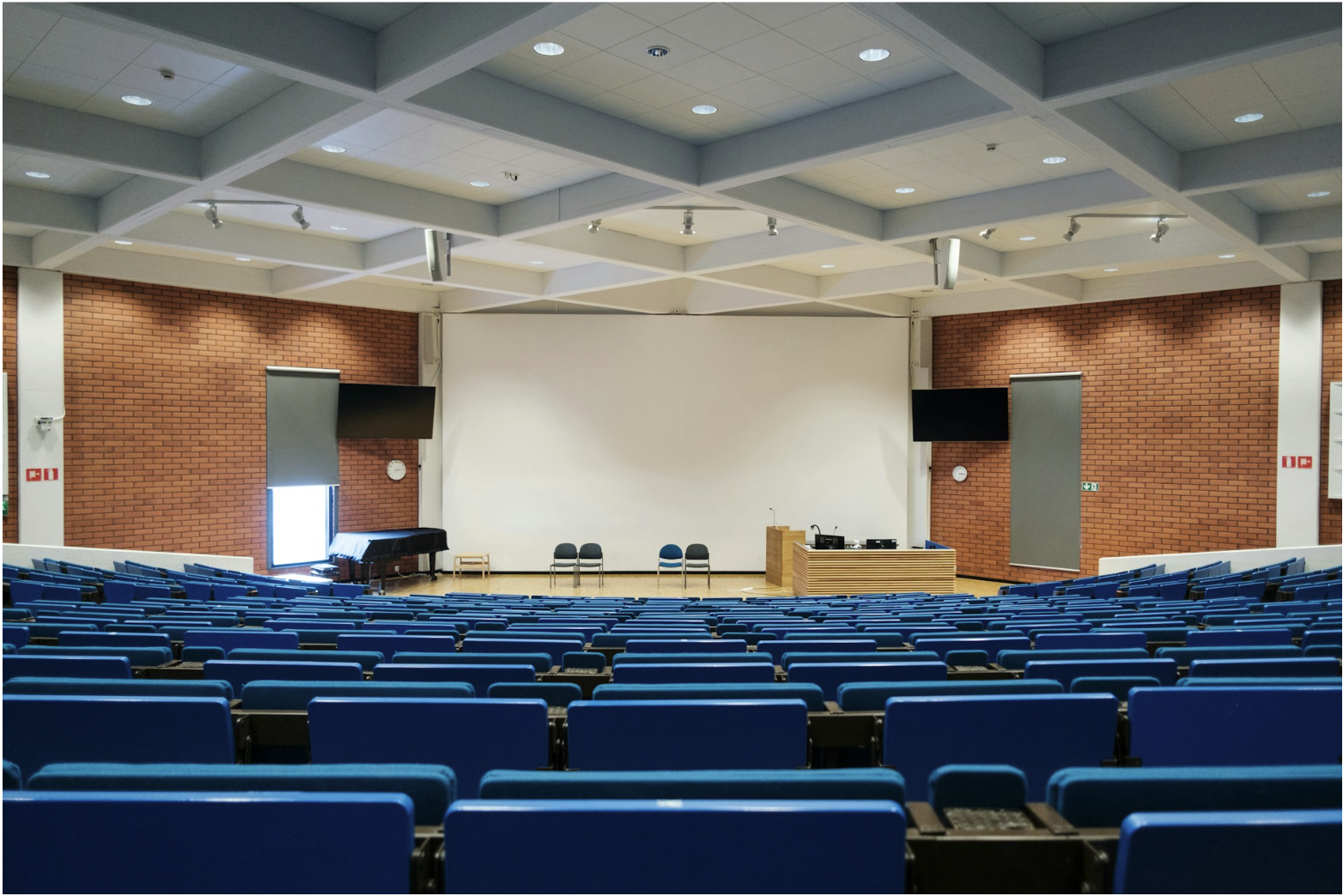
Higher education environments also rely on coordinated control. Lecture halls, auditoriums, and active learning spaces may include projectors, screens, displays, microphones, speakers, and digital media sources. Serial communication can support direct control of key devices within that ecosystem.
Hospitality spaces use similar control needs in ballrooms, meeting rooms, and event venues. A room may shift from a presentation layout to a banquet layout or from a panel discussion to a production environment. Control pathways help connected devices respond consistently to those changes.
Healthcare and government environments also benefit from dependable control communication. Simulation labs, conference facilities, briefing rooms, council chambers, and command centers often require repeatable system behavior. In these spaces, audio, video, and lighting control need to work together without confusion.
Retail and public environments may use serial control for digital signage, interactive displays, kiosks, and experiential zones. In those applications, DB9 serial cable supports direct device communication inside a larger commercial AV infrastructure.
Specifying the Right DB9 Serial Cable for Pro AV Integration
DB9 serial cable selection depends on the control relationship between devices, the distance involved, and the environment around the pathway. Premade DB9 to DB9 assemblies are often useful for rack-to-rack or device-to-device connections where consistent factory terminations matter. Bulk cable with pigtail leads may appear in systems where control processors, terminal blocks, or Euroblock-style interfaces define the connection point.
Connector orientation also matters. Male and female DB9 ports vary by device, so the cable assembly has to match the equipment being connected. This is a specification detail, not a cosmetic one. If the connector format does not align with the device ports, the control path cannot function as intended.
Cable length matters because RS-232 is typically associated with shorter control runs. Longer serial communication paths may require different approaches, such as RS-422, RS-485, or signal support hardware, depending on the system design. That does not make DB9 less valuable. It simply means the communication method should match the control distance and device relationship.
Shielding can also matter in electrically active environments. Large venues, production spaces, factories, and equipment-heavy rooms may introduce electromagnetic noise that affects low-voltage control communication. Shielded serial cable can help maintain signal integrity when the environment demands added protection.
Commercial-grade construction also matters. Jacket durability, conductor quality, connector build, and consistent electrical performance all support long-term serviceability. DB9 may carry low-bandwidth commands, but those commands are critical to system behavior. For more Pro AV cable guidance, the Pro AV resource center offers additional reference material.
How DB9 Serial Cable Fits Alongside Digital Media Infrastructure
Digital media systems often include category cable, coax, speaker cable, control cable, and device-specific patching. DB9 serial cable works alongside those pathways rather than replacing them. A digital media cable wire may carry content between source and display equipment, while the serial cable handles commands that govern device behavior.
That separation helps explain why control cabling deserves its own consideration. A system can have strong video transport and still perform poorly if the control layer is unstable. If a display does not respond, a projector does not switch inputs, or a lighting preset does not trigger correctly, the user experience suffers even if the media signal itself is intact.
The full AV system depends on both paths. Media cables move content. Control cables coordinate behavior. DB9 serial cables support the command layer that makes complex systems feel unified.
DB9 serial cables remain important in Pro AV system integration because commercial AV systems depend on coordinated control across audio, video, and lighting environments. A DB9 to DB9 serial cable provides a dedicated command path between control processors and connected devices, supporting predictable operation across complex systems.
The value of DB9 serial cable comes from its focused role. It does not carry high-bandwidth media, but it helps devices respond accurately inside the control system. For teams reviewing serial control, digital media cable, or broader Pro AV cable requirements, use the AV resource page or go to the contact page to continue the conversation.
