Belden 7931A Equal: WCW FEP-CAT6 Petroleum Cable
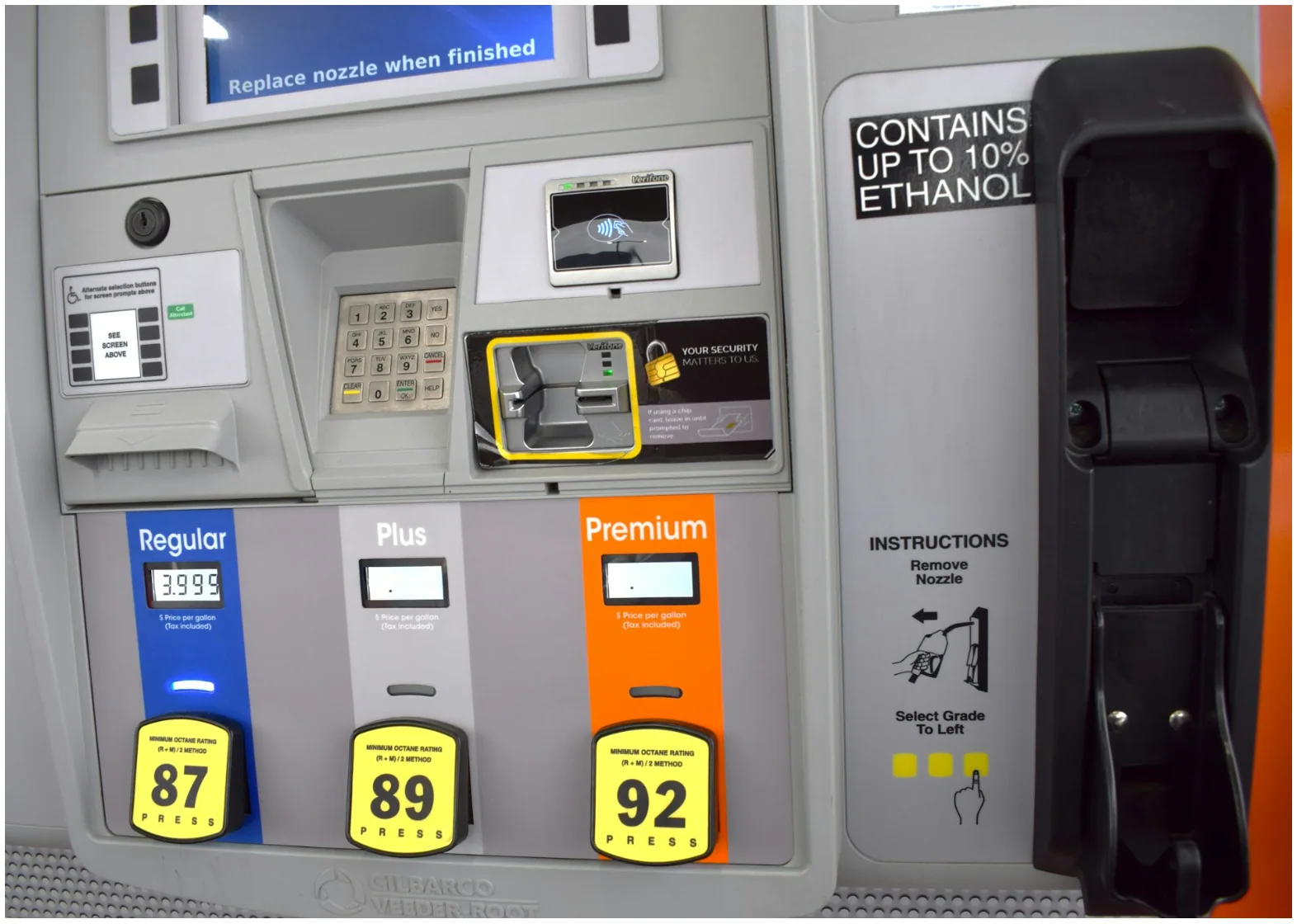
Petroleum forecourt data infrastructure demands more than standard Category 6 performance. A cable in this
environment has to support network traffic while resisting fuel vapor, oil exposure, sunlight, moisture, and
temperature extremes. Specifiers searching for a Belden 7931A equal need a verified construction match, not a
general-purpose substitute. FEP-CAT6 (part number
030-7781) fits that role as a 23 AWG, 4-pair UTP Category 6 cable with FEP Teflon insulation, a
gas/vapor-tight FEP jacket, CMP listing, 300V rating, and ANSI/TIA-568-C.2 Category 6 verification to 350 MHz.
Why Search for a Belden 7931A Equivalent
Petroleum forecourt applications require both data performance and chemical resistance. Standard plenum Cat6 may satisfy network requirements in ordinary commercial spaces, but petroleum environments add fuel vapor, oil residue, wet-location exposure, and sunlight to the specification.
FEP, or Fluorinated Ethylene Propylene, is central to this cable category. In a petroleum cable, FEP insulation and a gas/vapor-tight FEP jacket help maintain dielectric stability and jacket integrity when exposed to hydrocarbons. PVC and other general-purpose jacket materials can degrade over time when exposed to fuel-related substances. FEP resists those conditions more effectively, making it suitable for harsh environment data applications.
CMP rating also matters. Petroleum forecourt data paths may connect dispenser areas, controller equipment, and facility network systems while crossing spaces that require plenum-rated cable. A CMP-rated Category 6 cable gives specifiers a cable type that supports plenum requirements and petroleum exposure considerations in one construction.
Category 6 performance is another key part of the benchmark. Forecourt networks now support more than basic data. EMV payment systems, CRIND communication, POS connections, ATG controller data, and broader gas station technology all increase the need for stable network performance. Category 6 verification to 350 MHz provides the headroom expected in these data transmission environments.
FEP-CAT6 030-7781 Spec-for-Spec Verification
FEP-CAT6, part number 030-7781, matches the Belden 7931A equal conversation across the construction points procurement teams typically review first. It uses 23 AWG solid bare copper conductors in a 4-pair UTP configuration. The color code follows standard pair identification:
Blue-White/Blue, Orange-White/Orange, Green-White/Green, and Brown-White/Brown.
The cable uses 0.0095 inch FEP Teflon insulation around the conductors. Pair lay lengths vary to minimize
crosstalk, which supports Category 6 electrical performance. The jacket is a 0.010 inch gas/vapor-tight FEP
construction with a black jacket. The nominal overall diameter is 0.280 inches.
Electrically, the cable supports data transmission up to 350 MHz and carries a 100 ohm impedance, plus or minus 10 percent. Capacitance is listed at 14 pF per foot, and velocity of propagation is 70 percent. The cable carries a 300V rating and a temperature range from -100°C to 200°C.
The marking identifies CL2P (UL), 23 AWG, 200°C, CMP C(UL)US, TIA/EIA-568-C.2 CAT 6, Oil Sun Res, Gas Res, Suitable for Wet Locations, and Gas/Vapor-Tight FEP Jacket. It is UL Listed Type CMP, verified to ANSI/TIA 568-C.2 UTP Category 6, C(UL), RoHS compliant, and approved for plenum use without conduit per the NFPA 262 flame test. For product category context, the Petroleum Category Cable page provides more information on related constructions.
Where FEP Cat6 Cable Belongs in Petroleum Forecourt Infrastructure
FEP-CAT6 is suitable for environments where data transmission and petroleum resistance both matter. The cable is not simply a Cat6 cable with a different jacket. It combines verified Category 6 electricals with gas-&-oil-resistant cable performance characteristics.
Forecourt Data Networks and Dispenser Communications
Forecourt data networks connect fuel dispensers, controllers, and related communication equipment. These pathways may operate near fuel handling systems, dispenser cabinets, and equipment areas where vapor exposure and moisture can appear. A petroleum-rated Category 6 cable maintains network performance while using jacket and insulation materials designed for that environment.
The 23 AWG solid bare copper conductors support data transmission, while the FEP insulation and jacket resist the chemical conditions associated with petroleum infrastructure. This combination helps differentiate FEP-CAT6 from standard plenum Category 6 cable.
POS Communications and Back-Office Connectivity
POS systems depend on reliable communication between dispenser systems and store-level transaction platforms. This data path may cross different environments, including petroleum-adjacent areas and plenum-rated spaces. A cable with a CMP listing and gas/vapor-tight FEP construction can meet both categories of requirements in a single product.
Payment traffic and transaction data place higher expectations on reliability. In this context, cable performance is part of the larger system supporting payment security in gas pump wiring systems. Stable data transmission helps reduce communication issues between the forecourt and back-office systems.
ATG Controller Connectivity
Automatic tank gauge systems monitor underground storage tank levels, leak detection, and inventory data. These systems depend on consistent communication between sensors, controllers, and facility systems. ATG data pathways can operate in petroleum environments where fuel vapor or wet-location exposure may be present.
A petroleum cable with FEP insulation and a gas/vapor-tight jacket supports this type of network segment. Category 6 performance helps maintain data integrity, while the oil, gas, sunlight, and wet-location markings help align the cable with environmental demands.
EMV Upgrade Wiring and CRIND Data Paths
EMV upgrades moved more payment intelligence into the dispenser environment. That shift increased demand for gas station cables for EMV upgrades that support secure, reliable data communication in fuel-adjacent areas. For more detail on that topic, this article on gas station cables for EMV upgrades offers a useful companion resource.
CRIND system wiring in gas pumps involves communication between the card reader, dispenser electronics, payment systems, and forecourt controller. CRIND data paths operate near motors, switching equipment, and petroleum exposure. A FEP-based Category 6 cable supports the data side of the application while resisting environmental stressors that standard Cat6 cables may not.
Why Standard Plenum Cat6 Is Not a Petroleum Cable Substitute
Standard plenum Cat6 may look similar from a distance because it serves the same basic purpose as Category 6. The difference appears in material compatibility. Most standard plenum Category 6 cables do not use a gas/vapor-tight FEP jacket and may not carry oil, gas, sunlight, wet-location, and petroleum-environment markings.
Chemical exposure is the main issue. Hydrocarbon vapor and fuel-related substances can degrade ordinary jacket materials over time. Once jacket integrity changes, the cable may experience physical damage, altered electrical behavior, or reduced performance. Petroleum cable construction addresses that risk by selecting materials designed for exposure to fuels.
Compliance also matters. If a project specification calls for petroleum-rated cable, substituting standard plenum cable can create documentation risk. The cable may meet a plenum requirement but fail to address the petroleum exposure requirement. In commercial fuel environments, material ratings and application suitability need to match the actual conditions.
Maintenance cost creates another consideration. A cable failure in a forecourt data pathway can disrupt transaction systems, monitoring equipment, and dispenser communication. The cost of downtime can exceed the initial difference between standard plenum Cat6 and FEP-based petroleum cable.
Sourcing FEP-CAT6 Petroleum Cable
FEP-CAT6 (part number 030-7781) supports the Belden 7931A equal discussion by matching the expected Category 6 data profile while adding petroleum-specific resistance. It combines 23 AWG solid bare copper conductors, 4-pair UTP construction, FEP Teflon insulation, a gas/vapor-tight FEP jacket, CMP listing, 300V rating, and verified ANSI/TIA-568-C.2 Category 6 electricals up to 350 MHz.
For broader petroleum cable context, the Petroleum Resource Center provides additional information on cable types used in fuel and oil-related environments. For specification questions or procurement support, the contact page offers a direct next step.
FEP-CAT6 is a Belden 7931A equivalent built for petroleum forecourt data networks where standard Category 6 cable does not fully address the environment. Its FEP insulation, gas/vapor-tight FEP jacket, CMP listing, oil resistance, gas resistance, sunlight resistance, wet-location suitability, and Category 6 verification create a clear specification profile for fuel-related data infrastructure.
View this cable as a practical answer to a specific problem: maintaining Category 6 data performance in environments shaped by petroleum exposure. For forecourt data networks, POS communication, ATG controller connectivity, EMV upgrade wiring, and CRIND data paths, the construction details matter as much as the network category.
