Supporting Secure Fuel Transactions and CRIND Networks
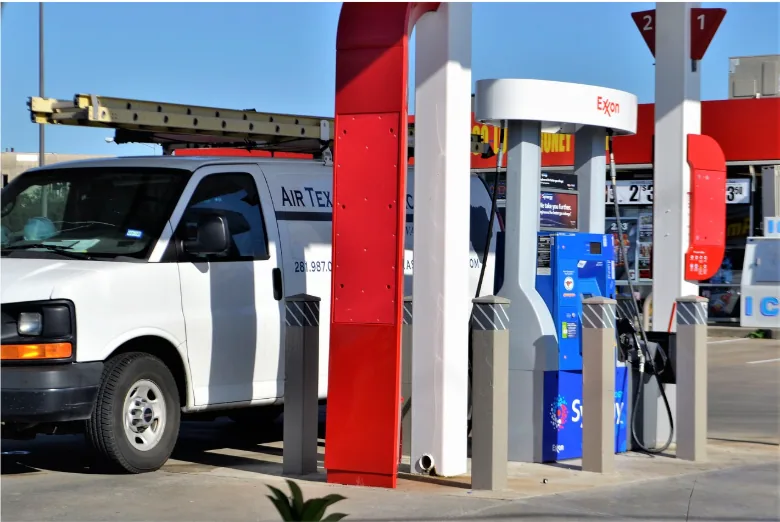
Underground storage tank wire and cable play a quiet but critical role in modern fuel sites. A fueling location is now a connected environment where low-voltage cabling carries monitoring data from beneath the ground and secure payment data at the dispenser. Tank probes, leak detection equipment, sensors, card readers, CRIND electronics, and site controllers all depend on signal paths that keep information moving cleanly. Before software, encryption, or network coordination can work, the physical cabling has to support the environment. In petroleum settings, that means cable construction, jacket chemistry, shielding, and conductor protection all matter.
Two Signal Environments in Modern Gas Station Technology
Gas station technology brings two major signal environments together on the same site. The first sits below the surface, where tank monitoring circuits connect probes, sensors, leak detection equipment, submersible turbine pump controls, and automatic tank gauging systems to the store or control console. These circuits help operators track inventory, detect issues, and monitor fuel system conditions.
The second signal environment sits at the forecourt. Dispensers, payment terminals, PIN pads, CRIND boards, network devices, and controller connections support customer transactions and site communication. EMV gas station innovations have added more secure payment functions at the dispenser, placing greater emphasis on data movement between pump electronics, site controllers, and payment networks.
These two environments serve different jobs, but they often share nearby pathways,
adjacent infrastructure corridors, and exposure to petroleum vapor, moisture, electrical noise, and equipment movement. That is why fuel site cabling needs more than basic signal continuity. It needs construction that matches the setting before digital systems can perform as expected.
What Underground Storage Tank Wire and Cable Must Withstand
Underground storage tank wire and cable face conditions that ordinary low-voltage cable may not handle well. The tank environment can include prolonged moisture, soil chemistry, hydrocarbon exposure, fuel vapor, mechanical pressure from backfill, and abrasion from pathway edges. Even when circuits connect to monitoring rather than payment systems, those environmental factors can affect long-term signal performance.
Cable construction answers those conditions through materials and design. Gas-and-oil-resistant jackets help the cable withstand petroleum exposure. Water-blocking features limit moisture migration. Tinned copper conductors help resist oxidation when moisture and chemical off-gassing are present along the cable pathway. FEP jacketing can support vapor-tight performance by limiting fuel-vapor migration along the cable path. A strong jacket also helps protect the cable core from abrasion and pressure.
Tank probe and sensor areas often fall within hazardous-location discussions because fuel vapor and liquid exposure can exist near the equipment. At a descriptive level, these areas are commonly treated as Class I Division 1 environments.
The Petroleum Resource Center offers a helpful starting point for reviewing petroleum cable categories, jacket types, and related specification language.
CRIND System Wiring in Gas Pumps and the Forecourt Data Path
CRIND system wiring in gas pumps supports the payment and communication path at the dispenser. CRIND stands for Card Reader in Dispenser, and the system connects payment electronics at the pump to controllers, payment networks, and site systems. A transaction may begin at the dispenser screen or keypad, move through the CRIND board, pass through the dispenser wiring path, reach a forecourt controller, and then continue into the site network.
Each segment can encounter a different electrical environment. Pump controllers, payment terminals, PIN pads, lighting, monitoring equipment, motors, and network devices can create a dense electromagnetic neighborhood. In that setting, shielding, impedance control, pair balance, and cable construction help reduce noise and support clean data movement.
Gas station cables for EMV upgrades became more important as payment systems moved to chip-based transactions and more advanced dispenser electronics. EMV did not only change the payment interface. It also increased the importance of maintaining stable communication paths throughout the entire forecourt. For more background on this part of the site, this guide to CRIND system wiring in gas pumps provides a related look at dispenser wiring considerations.
How Secure Wiring Supports Payment Security at the Dispenser
CRIND data protection through secure wiring starts with a simple idea: digital payment security still depends on a stable physical layer. Encryption, authentication, payment processors, and software protections do important work. Still, they cannot fully compensate for an unstable cable path that drops packets, picks up noise, or creates intermittent faults. A clean, low-noise connection gives the digital security stack a better foundation.
Payment security in gas pump wiring systems depends on several construction details working together. Foil shielding can help reduce electromagnetic interference. Controlled impedance and pair balance help maintain signal quality. Conductor gauge supports the circuit’s power or signal needs. Insulation and jacket materials protect the cable core from the environment around the dispenser. In petroleum settings, those materials also need to account for fuel vapor, oil exposure, and chemical contact.
For foil-shielded petroleum signal cable applications, a Belden 88760 equivalent can be used in discussions where the specification calls for comparable construction and performance. The key is to treat the cable as a coordinated component, not a loose collection of features. Shielding, conductor design, insulation, and jacket chemistry all influence how the wiring supports secure communication.
This is where the physical infrastructure often gets overlooked. The transaction may look digital on the screen, but every secure exchange still travels through real conductors, shields, connectors, controllers, and pathways.
Specifying Petroleum-Rated Cable Across the Site
Petroleum-rated cable decisions should reflect the circuit, environment, and signal type. A tank monitoring circuit does not have the same job as a CRIND data path, and a dispenser communication run does not face the same exposure as a buried probe connection. Still, the site functions as a single coordinated fuel infrastructure system.
Engineers and integrators often weigh conductor configuration, conductor gauge, shielding, jacket chemistry, insulation material, and temperature rating together. A two-conductor cable may support a defined power or control pair. A triad may help where controlled geometry supports a specific signaling role. Shielding may matter more in noisy dispenser areas. Jacket chemistry may matter most around petroleum vapor, moisture, or buried pathways.
Underground storage tank wire and cable should align with the tank-side exposure profile, while forecourt cable should match the dispenser and payment-side communication environment. When both sides use coherent specification logic, the site gains clearer documentation, stronger component traceability, and more predictable signal behavior.
The petroleum setting also raises the stakes for material compatibility. Fuel sites expose wiring to conditions that differ from ordinary commercial spaces. Petroleum vapor, oil, temperature swings, moisture, and equipment movement all shape the cable decision before any data device enters the conversation.
Why the Physical Layer Matters Before Digital Security
Secure fuel transactions depend on more than payment terminals. The physical layer carries the data that those terminals process. If the cable path suffers from interference, moisture damage, oxidation, or jacket breakdown, payment systems may see communication errors that look like device or network problems. In reality, the problem may begin with the wiring environment.
This is why low-voltage wire and cable solutions deserve attention in fuel system planning. A petroleum site may combine tank monitoring, dispenser control, payment data, security devices, and site networking. Those circuits may perform different tasks, but they all need clean signal paths.
EMV gas station innovations increased the sophistication of dispenser transactions, but they also made stable communication more important. Chip readers, encrypted PIN pads, controllers, and networked payment systems work best when the wiring underneath supports consistent data exchange. Secure software needs dependable infrastructure beneath it.
Bringing Fuel Monitoring and Payment Networks Together
A fuel site depends on both underground monitoring and forecourt payment communication. Beneath the surface, underground storage tank wire and cable supports sensors, probes, leak detection, and tank system reporting. At the dispenser, CRIND wiring supports customer interaction, payment authorization, and the secure transfer of transaction data. These systems may feel separate, but both depend on cabling that can handle petroleum environments and maintain signal quality.
The central point is straightforward. Reliable cable construction supports reliable system communication. Gas and oil resistance, shielding, water-blocking features, tinned copper conductors, vapor-resistant jacket materials, and proper signal cable design all help the physical layer do its job. That physical layer supports fuel management on one side and secure transactions on the other.
For specification support tied to petroleum cable, CRIND wiring, or fuel site communication infrastructure, use the contact page to connect with the team.
